
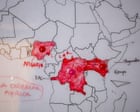
An unprecedented Ebola outbreak sweeping across Africa threatens to breach international borders, public health leaders have warned, as surging infections and a mounting death toll prompt urgent appeals for global containment funding.
The dire assessment comes as the official caseload surpassed 10,000, with nearly 5,000 deaths recorded across affected territories, Reuters World reported. The scale of transmission has triggered alarm within regional health institutions and drawn stark warnings regarding the vulnerability of international transport networks.
Addressing the escalating emergency, Dr Jean Kaseya, director general of the Africa Centres for Disease Control and Prevention (Africa CDC), cautioned that the crisis could soon reach Western nations, including the United Kingdom, if the international community fails to deliver immediate interventions.
Parallels drawn to Covid-19 emergence
In his briefing, Dr Kaseya compared the present trajectory to the initial spread of Covid-19, which expanded rapidly from China to cripple healthcare infrastructure and global economies. While Ebola typically requires direct contact with bodily fluids to transmit, unlike airborne pathogens, the high fatality rate and unchecked secondary transmission in dense transport hubs represent an acute public health hazard.
Health officials emphasise that without adequate border screening and containment infrastructure within Africa, international travel corridors remain susceptible to travellers incubating the infection. The warning serves as a sobering reminder of how rapidly local epidemics can transform into cross-border crises when regional containment breaks down.
Strained health systems plead for resources
The Africa CDC has underscored that containment is entirely dependent on securing substantial new capital for treatment facilities, contact tracing, and protective equipment. Public health agencies estimate that hundreds of millions of dollars—representing tens of millions in Australian dollars—are urgently required to stabilise supply chains and distribute emerging therapeutics.
Frontline healthcare facilities across affected African nations are currently operating under severe strain. Doctors and nursing staff are contending with shortages of isolation units, rapid diagnostic kits, and specialised personal protective gear, leaving medical personnel disproportionately vulnerable to contracting the lethal haemorrhagic fever.
Without a swift influx of funding to replenish stocks and expand field hospitals, international monitors fear local containment efforts will buckle, accelerating the disease's momentum through urban transit corridors.
International surveillance and border vigilance
The prospect of cases arriving in Europe and beyond has reignited discussions surrounding international surveillance protocols. Western health authorities have begun assessing passenger screening mechanisms and reviewing isolation preparedness within major transit hubs.
For countries in the Asia-Pacific, including Australia, standard border biosecurity mechanisms and quarantine frameworks remain on alert for returning travellers exhibiting unexplained febrile symptoms. While the risk of domestic transmission in developed nations with robust infection control remains low, epidemiologists stress that no nation can remain insulated from high-consequence pathogens without extinguishing the reservoir at its source.
Global health organisations continue to lobby donor nations to release targeted humanitarian funding before the outbreak expands further into neighbouring territories.