
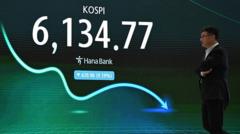
Australian investors are facing a tumultuous week as global tech stocks experience a sharp downturn, fuelled by growing skepticism about the immediate profitability of artificial intelligence. The market turbulence, which saw South Korea's Kospi index temporarily halt trading after an 8% plunge on Tuesday, is now reverberating across local portfolios, particularly those exposed to the technology sector.
While the Australian share market, dominated by financials and mining, is less directly exposed to the tech sector's daily swings compared to its Asian counterparts, the ripple effects are undeniable. Analysts warn that the widespread sell-off in technology giants could trigger a broader flight from risk assets, impacting Australian superannuation funds and individual investors with global holdings.
AI Hype Meets Hard Numbers
The current market jitters appear to stem from a re-evaluation of the exuberant valuations placed on companies heavily invested in artificial intelligence. After a period of rapid growth driven by the promise of AI, investors are now scrutinising the timelines for genuine revenue generation and sustainable profit margins. BBC Business reported that the sharp falls in major chip manufacturers and technology firms reflect a growing concern that the anticipated returns from AI development may be further off, or less substantial, than previously priced in.
This re-calibration is particularly acute for semiconductor firms, which are at the heart of AI development. While demand for advanced chips remains high, the sheer scale of investment required, coupled with increasing competition and geopolitical tensions impacting supply chains, is putting pressure on earnings expectations. The temporary trading halt on South Korea’s Kospi index underscores the sudden and severe nature of this investor sentiment shift.
Local Portfolios Feel the Pinch
While the ASX 200 has shown some resilience, tech-heavy segments of the Australian market are feeling the pressure. ETFs and managed funds with significant exposure to global tech giants will likely see their values decline. Australian superannuation funds, which typically hold diversified international portfolios, will also be monitoring the situation closely.
Financial advisors are cautioning investors to avoid panic selling but to review their exposure to highly volatile tech stocks. The long-term outlook for AI remains strong, but the recent market correction serves as a stark reminder of the inherent risks associated with high-growth sectors, particularly when valuations detach from immediate profitability. This period of readjustment is a crucial test for the robustness of tech valuations and the patience of investors.
Broader Economic Implications
The tech sector's woes could have broader implications for the global economy, potentially dampening consumer confidence and investment. Australia, as a major trading partner with Asian economies, is not immune to these shifts. A sustained downturn in global tech could impact demand for Australian resources and services, albeit indirectly.
Economists suggest that central banks globally will be watching these developments carefully. While inflation remains a primary concern, significant market instability could influence future monetary policy decisions. For now, Australian shareholders are urged to remain calm and consider a long-term perspective amidst what appears to be a necessary, albeit painful, correction in the global technology landscape.