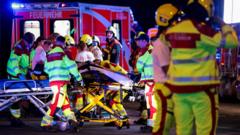
The head of the Hamas-led police force in northern Gaza, identified as Colonel Raed al-Banna, has been killed in an Israeli airstrike, Al Jazeera reported Wednesday, marking a significant development in the ongoing conflict. His death comes amid a grim backdrop of escalating violence that also claimed the lives of four other Palestinians in separate Israeli strikes across the besieged enclave.
The Israeli military has intensified its operations in recent weeks, asserting that its targets are military infrastructure and operatives of Hamas, the Islamist group that governs Gaza. However, the strikes consistently result in civilian casualties, raising serious concerns from international human rights organisations and prompting renewed calls for an immediate ceasefire.
Adding to the somber tally, an unnamed Palestinian policeman succumbed to wounds sustained in a previous Israeli attack last week, bringing the total reported deaths within a short span to at least six Palestinians. The persistent cycle of violence continues to devastate a region already grappling with widespread humanitarian crisis and an absence of vital resources.
Gaza's Crumbling Authority Under Fire
The targeted killing of Colonel al-Banna represents a direct blow to the administrative and security structures within the Hamas-controlled northern Gaza Strip. As a senior figure, his role would have encompassed maintaining law and order, albeit under the purview of a designated terrorist organisation by numerous Western nations, including Australia. The Israeli Defence Force (IDF) has previously stated its intention to dismantle Hamas's military and governmental capabilities, and strikes against high-ranking officials are consistent with this stated objective. However, critics argue that such actions further destabilise an already fragile society, hampering any semblance of organised civilian life and governance within the war-torn territory.
A Daily Reality of Death and Destruction
The four other Palestinian deaths reported by Al Jazeera occurred in various locations across Gaza, underscoring the pervasive nature of the Israeli military's current offensive. While details surrounding these specific incidents remain scarce, they typify the daily reality for Gaza's 2.3 million residents, who face constant threat from aerial bombardment and ground incursions. Hospitals, already operating under extreme duress with severe shortages of medical supplies, clean water, and electricity, struggle to cope with the influx of casualties. The United Nations has repeatedly warned of a looming famine and a public health catastrophe, with a significant segment of the population displaced and living in overcrowded, unsanitary conditions.
International Calls for De-escalation Fall Flat
The latest casualties come as international pressure mounts for a durable ceasefire and increased humanitarian aid access to Gaza. Australia, alongside many other nations, has expressed deep concern over the humanitarian situation and called for adherence to international law. However, despite diplomatic efforts, including proposed peace plans and prisoner exchange negotiations, the conflict shows little sign of abating. The ongoing hostilities continue to fuel regional instability, with fears of broader escalation across the Middle East. With an estimated 34,000 Palestinians killed since the conflict began last October, primarily women and children, according to Gaza health authorities, the human cost of the conflict is a staggering figure, equivalent to nearly the entire population of Wagga Wagga. The recent deaths serve as a stark reminder of the urgent need for a resolution that can bring an end to the suffering and prevent further loss of innocent lives in this protracted and devastating conflict. Australian taxpayers have contributed millions in humanitarian aid to the region, yet the aid effort remains critically under-resourced compared to the monumental need.