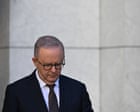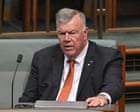
One Nation leader Pauline Hanson has accused Anthony Albanese of attempting to buy political influence after the Prime Minister allegedly made an unsolicited offer of a taxpayer-funded adviser to her party.
The staffing offer, proposed for recently installed One Nation MP David Farley, carried an annual salary of up to $200,000, The Guardian Australia reported. Senator Hanson condemned the approach as a calculated political tactic designed to curry favour with the new parliamentarian as the Albanese government navigates an increasingly combative Senate.
Claims of taxpayer-funded leverage
In a statement published on social media, Senator Hanson characterised the Prime Minister’s overture as entirely "unsolicited", asserting the gesture was an unacceptable attempt to "exert undue political influence" over federal lawmakers. One Nation argued that extending high-salary personnel at public expense crossed an ethical line, transforming routine administrative resources into a political sweetener.
Parliamentary staffing allocations are traditionally determined under executive discretion via the Members of Parliament (Staff) Act. While prime ministers routinely negotiate staffing arrangements to assist independents and minor parties with heavy legislative workloads, such discretionary decisions frequently draw intense scrutiny whenever negotiations intersect with parliamentary bargaining.
One Nation seized on the disclosure to portray the Albanese administration as willing to deploy Commonwealth funds to neutralise crossbench opposition.
Farley’s arrival shifts parliamentary arithmetic
The dispute focuses on Mr Farley, whose arrival in Canberra expanded One Nation’s parliamentary presence and added another layer of complexity to the federal balance of power.
Facing an unyielding Coalition opposition across key policy areas, the Albanese government is compelled to assemble shifting coalitions among the Greens and diverse crossbench members to steer legislation through the upper house. Constructive relations with minor parties can occasionally break deadlocks on contested national security, industrial, or regional development measures.
However, Senator Hanson’s public rejection of the arrangement indicates that any ministerial attempt to establish a separate dialogue with Mr Farley has instead provoked outright hostility from the party leadership.
Enduring friction over crossbench resources
The issue of political staffing has remained a volatile flashpoint in Canberra throughout the current parliamentary term. Shortly after taking office in 2022, Mr Albanese reduced the baseline allocation of personal advisers for crossbench parliamentarians from four to one, triggering outrage from teal independents and minor senators who argued the cuts undermined their ability to scrutinise complex government bills.
Although subsequent reviews and individual determinations have restored select resources, crossbenchers have repeatedly warned that maintaining prime ministerial discretion over staff numbers risks turning basic parliamentary support into an instrument of executive patronage.
Neither the Prime Minister’s Office nor Mr Farley issued further comment on Thursday. The government has previously insisted all staffing allocations are assessed on administrative merit and workload demands rather than political co-operation.
For Senator Hanson, the episode provides an opportunity to burnish her anti-establishment credentials, positioning One Nation as incorruptible against government enticements while keeping the pressure firmly on Labor’s management of public funds.