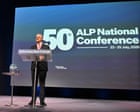
ADELAIDE — In a political manoeuvre as audacious as it was effective, Pauline Hanson, the enigmatic leader of One Nation, managed to dominate discussions at Labor’s national conference this week, despite her physical absence. As the Guardian Australian politics column aptly noted, Hanson might as well have been a delegate, her name and political spectre looming large over the proceedings.
Her omnipresence – invoked directly, alluded to, dismissed, and, significantly, feared – underscores a crucial point: Hanson is not merely an opposition nuisance, but a formidable political force occupying the thoughts of both government and opposition 18 months before Australians next head to the polls. Prime Minister Anthony Albanese, known for his assertion that people underestimate him, would do well to heed his own advice when it comes to the One Nation firebrand.
The Unseen Delegate's Influence
The Labor conference, ostensibly a platform for the party to consolidate its message and prepare for the future, found itself repeatedly grappling with the ghost of Hanson. Discussions surrounding regional concerns, social policy, and even economic direction seemed, at times, to orbit around the gravitational pull of One Nation's often unorthodox positions. This uninvited, yet undeniable, influence highlights Hanson's unique ability to shape the political narrative, even from afar. Her capacity to resonate with a segment of the Australian electorate, often disenfranchised and overlooked by mainstream parties, makes her a potent, if unpredictable, player.
A Masterclass in Scrutiny Evasion
One of Hanson's standout political talents, as observed by political commentators, is her unparalleled ability to evade sustained scrutiny. While other politicians would face immediate and extensive condemnation for actions that might be deemed controversial or electorally damaging, Hanson often emerges relatively unscathed, her core support base seemingly impervious to criticism. This week offered further proof of her political Teflon coating. For almost any other political figure representing a mainstream party, the recent controversies orbiting One Nation would be career-ending. Yet, for Hanson, it merely adds another chapter to her long-standing narrative of defying expectations and conventional political wisdom. This unique resilience poses a serious challenge for Labor, which often struggles to land effective blows against her.
The Lingering Threat to Mainstream Parties
Despite her party's relatively small presence in federal parliament, Hanson's influence is amplified by her capacity to draw votes from both major parties, particularly in key regional and outer metropolitan seats. Her appeal often cuts across traditional party lines, capturing the discontent of voters who feel unheard by the political establishment. This electoral agility makes One Nation a persistent threat, forcing Labor and the Coalition to adjust their strategies and rhetoric to counter her appeal. The fear among Labor strategists is palpable: that underestimating Hanson could lead to an unexpected loss of votes to One Nation, particularly in an environment where voter disaffection with mainstream politics remains high. As the next federal election draws closer, ignoring the Hanson factor would be a significant miscalculation, potentially costing Labor crucial seats and, ultimately, government.