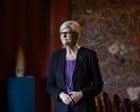
Federal police have concluded that Pauline Hanson's divisive comments about certain Muslims, made during a February interview, do not constitute hate speech. The decision has reignited debate over free speech versus incitement and drawn sharp criticism from community leaders across Australia.
Senator Hanson, leader of the One Nation party, ignited a firestorm earlier this year when she stated that 'not all Muslims are terrorists, but all terrorists are Muslims.' She went on to suggest that 'good Muslims' should identify 'bad Muslims' within their community, remarks widely denounced as deeply offensive and discriminatory. The Australian Federal Police (AFP) confirmed this week that, following a thorough review, no criminal charges would be laid against the Queensland senator.
Police Statement and Legal Threshold
An AFP spokesperson clarified that the investigation into Senator Hanson's comments concluded there was insufficient evidence to prove an offence against Commonwealth law had been committed. The police stressed the high legal threshold required to establish incitement or hate speech, which typically necessitates a direct call to violence or hatred against a specific group. Their statement noted that while comments may be considered offensive, this does not automatically cross the line into illegality. This nuanced legal position has often been a point of contention in Australia, where free speech protections are robust but not absolute, particularly when balanced against anti-discrimination laws.
Widespread Condemnation Continues
The initial comments, ABC News Australia reported, drew immediate and bipartisan condemnation from across the political spectrum. Senior government ministers and opposition figures alike criticised the remarks as divisive and un-Australian. Islamic community leaders were particularly vocal, expressing profound disappointment and fear that such statements legitimise prejudice and bigotry. Keysar Trad, spokesperson for the Australian National Imams Council, at the time described the comments as 'deeply hurtful' and an 'insult to the vast majority of law-abiding Muslim citizens.' He reiterated concerns this week that the police decision, while legally sound, might be perceived as condoning such inflammatory rhetoric.
Impact on Community Relations
Critics argue that regardless of legal findings, such high-profile statements by a federal politician have a tangible and damaging impact on social cohesion. Muslim Australians, many of whom have lived in Australia for generations and contribute significantly to the nation's fabric, frequently report experiencing increased discrimination and hostility following such public discourse. The police decision, while upholding the tenets of free speech, does little to alleviate the concerns of those who feel targeted by what they perceive as Islamophobic generalisations. Community organisations are now calling for greater education and dialogue to counter misinformation and foster a more inclusive national conversation, rather than relying solely on legal avenues for redress. They warn that the ongoing normalisation of such rhetoric risks further alienating minority groups and undermining Australia's multicultural values.
One Nation's Response and Future Implications
One Nation has predictably defended Senator Hanson, framing the police decision as a victory for free speech and an affirmation of her right to express her views. Supporters often interpret such controversies as evidence of an infringement on democratic freedoms, positioning Senator Hanson as a voice for those who feel unheard. However, political analysts suggest that while the police decision might embolden some, it does not mute the broader societal disapproval of discriminatory language. The incident highlights the ongoing challenge for Australian society in balancing individual liberties with the collective responsibility to prevent the spread of hatred and foster an environment of mutual respect. The debate surrounding these remarks is likely to continue, influencing future discussions on religious freedom, hate speech legislation, and the responsibilities of public figures in a diverse nation.