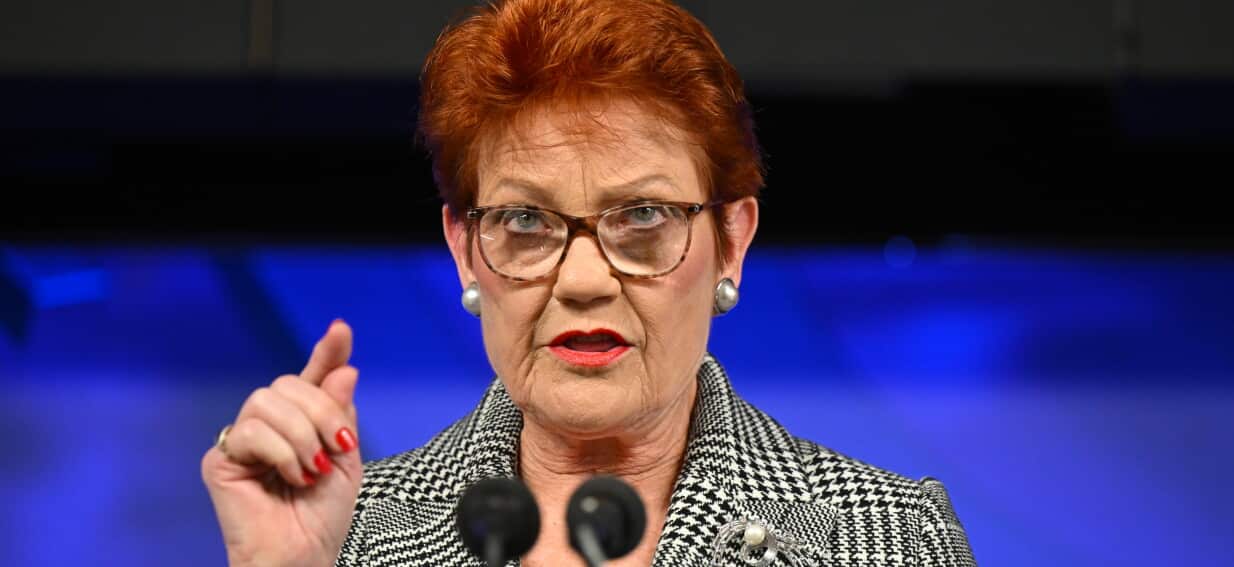
The Australian Federal Police (AFP) have concluded their investigation into highly controversial remarks made by One Nation leader Pauline Hanson, in which she declared there were “no good Muslims.” The announcement brings to a close a period of intense scrutiny and widespread condemnation that reverberated through the nation's political spectrum, religious communities, and civil society groups.
Ms. Hanson's incendiary comments, which SBS News Top Stories reported drew immediate and forceful backlash, sparked a national conversation about religious tolerance, freedom of speech, and the boundaries of public discourse in a multicultural society. While the AFP's decision means no further action will be taken in relation to the specific comments under investigation, the episode has undoubtedly left an indelible mark on Australia's social and political fabric.
A Firestorm of Criticism Ignited
The One Nation leader's assertion, made in a public statement, rapidly ignited a firestorm of criticism from an unusually broad coalition of voices. Mainstream political figures from both sides of the aisle were quick to distance themselves and condemn the remarks, underscoring a bipartisan discomfort with rhetoric perceived as divisive and discriminatory. This swift and unified rejection from within Parliament highlighted a prevailing sentiment that such broad generalisations about an entire religious group are unacceptable in contemporary Australian public life.
Religious organisations were particularly vocal in their disapproval, with peak Muslim bodies expressing deep concern over the potential for such statements to fuel Islamophobia and marginalise an entire community. Leaders from other faiths also joined the chorus, emphasizing the importance of interfaith harmony and mutual respect. Civil liberties and human rights groups chimed in, highlighting the dangers of hate speech and its potential to undermine social cohesion and the rights of minority groups.
The Legal and Ethical Tightrope
For the AFP, the investigation was a delicate balancing act, navigating the fine line between freedom of speech and the potential for incitement or vilification. Australia’s legal framework, while providing robust protections for free expression, also contains provisions against speech that could be considered discriminatory or hateful. The conclusion of the investigation suggests that, in this instance, Ms. Hanson's comments, while widely denounced, did not cross the specific legal thresholds for criminal prosecution under existing federal laws.
However, the ethical implications of such public statements remain a significant point of contention. Many argue that irrespective of legal ramifications, public figures, particularly those in leadership positions, bear a moral responsibility to foster unity rather than division. The public debate following the remarks showcased the tensions inherent in balancing these diverse values in a pluralistic democracy.
Resonating Beyond the Initial Outcry
The impact of Ms. Hanson's 'no good Muslims' comments has resonated far beyond the initial outcry, prompting a broader societal reflection on prejudice and inclusion. The incident served as a stark reminder of the ongoing challenges in combating religious discrimination and the need for continuous dialogue and education. Community leaders have called for greater efforts to promote understanding and counter misinformation about religious groups, particularly in an era where social media can amplify divisive narratives.
While the AFP investigation has concluded, the broader conversation about the limits of acceptable discourse in Australia, the responsibilities of political leaders, and the protection of minority communities from vilification, continues. The episode has underscored the vigilance required to maintain a respectful and inclusive public sphere, where diverse beliefs can coexist without resorting to prejudiced generalizations.