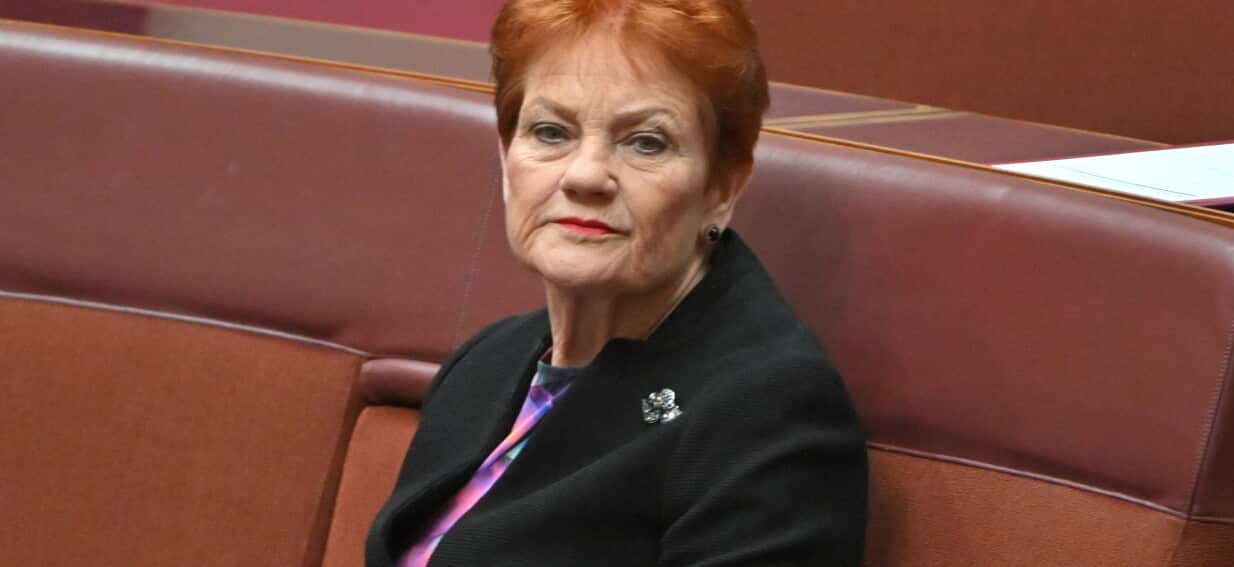
One Nation leader Pauline Hanson has sparked outrage and widespread condemnation after claiming domestic and family violence is a "two-way street", prompting a furious backlash from victim advocates, legal professionals, and support organisations nationwide.
Her comments, which emerged in a public forum, have been swiftly and unequivocally rejected by those on the frontline of preventing and responding to gendered violence. Critics argue that her characterisation fundamentally misunderstands the dynamics of power and control inherent in abusive relationships, potentially jeopardising vulnerable individuals and undermining vital support efforts.
Ignorant of Realities, Say Experts
Advocacy groups were quick to highlight the profound disconnect between Senator Hanson's remarks and the lived experiences of countless Australians, predominantly women, who endure coercive control and physical abuse. SBS News Top Stories reported that advocates and experts universally condemned the comments as deeply ignorant of the complex realities faced by victims of domestic and family violence.
"To suggest domestic violence is a 'two-way street' is not only factually incorrect but incredibly dangerous," stated a spokesperson for a leading national domestic violence charity, who wished to remain anonymous to protect their clients. "It perpetuates harmful myths that blame victims and divert attention from the perpetrator's responsibility. Domestic violence is about a pattern of control and abuse, where one party holds power over another. It is rarely, if ever, a 'two-way street' in the sense of mutual aggression."
Legal experts echoed these concerns, pointing out that Australian law clearly defines domestic violence as encompassing physical, sexual, emotional, psychological, and financial abuse, often perpetuated within an imbalance of power. "The legal framework acknowledges the systemic nature of abuse," explained a prominent Sydney barrister specialising in family law. "Comments like these undermine years of work by legal reformists and advocates to shift societal perceptions away from victim-blaming."
The Data Doesn't Lie
Statistics paint a stark picture that directly contradicts Senator Hanson's assertion. Australian Institute of Health and Welfare (AIHW) data consistently shows that women are overwhelmingly the victims of domestic and family violence, and men are overwhelmingly the perpetrators. One in three Australian women has experienced physical violence since the age of 15, and one in five has experienced sexual violence. For intimate partner violence, 95 per cent of all victims, whether male or female, have experienced violence from a male perpetrator.
"The data is unequivocal," said a representative from a prominent academic research centre focused on gender studies. "When we talk about the power dynamics, the fear, the isolation, and the long-term trauma, it's overwhelmingly women and children who are impacted. While men can also be victims, the vast majority of cases fit a clear pattern of gendered violence where the perpetrator is male."
Financial implications are also significant. The 2022 Women's Safety Package committed over $1.7 billion over six years, with total Commonwealth investment since 2013 exceeding $3.6 billion, to address this national crisis. Such investments underscore the widespread systemic nature of the issue, which is rarely a symmetrical conflict.
Damaging Impact on Survivors
Advocates fear that such high-profile commentary can have a profoundly damaging impact on survivors, potentially deterring them from seeking help. "When political leaders make such statements, it further entrenches the stigma and shame that victims already feel," commented a women's refuge manager in Western Sydney. "It can make them question their own reality, feel less believed, and ultimately, less likely to reach out for the support they desperately need. Our biggest challenge is helping women to understand that the abuse is not their fault."
Campaigners are calling on all public figures to educate themselves on the complexities of domestic and family violence. They urge for a more nuanced and compassionate discourse that acknowledges the established evidence and supports, rather than undermines, efforts to end violence against women and children in Australia. The conversation around domestic violence, they argue, must remain focused on accountability for perpetrators and robust support for those who experience abuse, rather than simplistic and misleading generalisations.