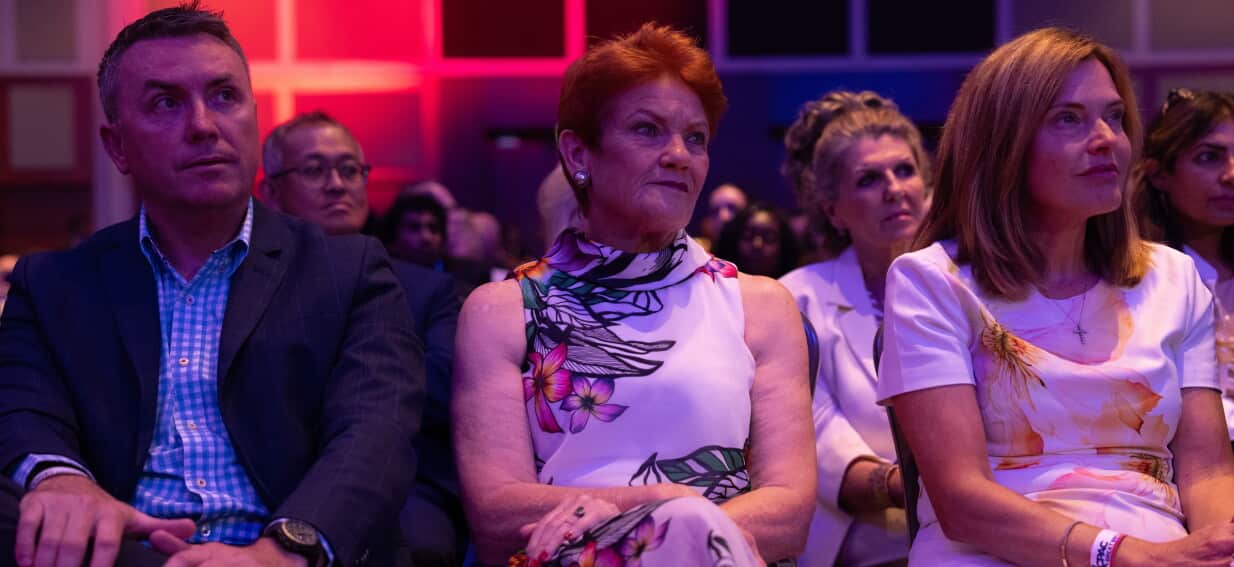
London: Pauline Hanson, the firebrand leader of Australia's One Nation party, has once again courted global controversy, delivering a provocative address at a conservative conference in the United Kingdom where she urged attendees to “not apologise for being white.” The speech, delivered to a receptive audience, also saw Senator Hanson lamenting what she described as the UK's “massive migration problems,” issues she claimed were alarmingly mirrored back home in Australia.
The senator's remarks, which were widely reported by SBS News Top Stories, underscored her longstanding and often divisive stance on immigration and multiculturalism. Her appearance at the conservative gathering in Britain signals a deliberate effort to align One Nation’s nationalist agenda with international right-wing movements, leveraging platforms to amplify her message beyond Australian shores. The sentiment expressed, particularly the exhortation to embrace and not apologise for one’s racial identity, is a familiar refrain in certain conservative circles, yet it consistently triggers strong reactions across the political spectrum.
Echoes of Home in British Halls
During her address, Senator Hanson drew direct comparisons between the socio-political landscapes of the UK and Australia, asserting that both nations are grappling with the consequences of what she views as unchecked immigration. While specific figures or detailed policy critiques were not immediately available from the initial reports, her generalisations align with One Nation's consistent narrative regarding population growth, infrastructure strain, and perceived threats to national identity stemming from diverse migration. For Australian readers, this conflation of British and Australian issues serves as a stark reminder of the global nature of debates surrounding national borders and cultural integration.
She articulated concerns about the pace and scale of demographic change, arguing that communities in both countries are struggling to absorb new arrivals, leading to social fragmentation and economic pressures. These arguments resonate with a segment of the Australian electorate that feels increasingly disenfranchised by mainstream political dialogue on immigration. However, they also draw sharp condemnation from those who champion Australia’s multicultural success story and argue that immigration is a vital component of economic prosperity and cultural enrichment.
A Global Platform for Divisive Rhetoric
Senator Hanson’s decision to speak at a UK conservative conference provides a significant platform for her ideology, offering international validation and exposure. Such events often bring together figures from various countries who share similar nationalist, anti-immigrant, and socially conservative viewpoints, creating a network for the exchange and reinforcement of these ideas. For One Nation, an appearance on this stage bolsters its image as a globally connected party, rather than one confined solely to the Australian political landscape.
The international spotlight also serves to amplify her message back home, potentially mobilising her base and attracting new supporters who feel their concerns are being ignored by the major parties. It also, inevitably, draws fresh criticism from political opponents and advocacy groups who argue that such rhetoric is divisive, promotes racial disharmony, and undermines the principles of an inclusive society. The cost of attending such a high-profile international event and the specific financial backing, if any, will undoubtedly be scrutinised by media and political commentators in Australia.
Australia's Immigration Debate Reignited
Back in Australia, Senator Hanson's comments are guaranteed to reignite the perennial debate surrounding immigration policy. With Australia's current net overseas migration figures being a hot topic, particularly in the context of housing affordability and infrastructure development, her intervention from afar injects further fuel into an already charged discussion. While the Albanese government has acknowledged the need to manage migration levels effectively, Senator Hanson’s critique goes further, implicitly questioning the very fabric of Australia’s multicultural society.
Her remarks will likely be seized upon by both her supporters and detractors, becoming another flashpoint in the ongoing ideological struggle over Australia’s identity and future. The broader implications for Australian politics will unfold in the coming days, as politicians, commentators, and the public react to the latest pronouncement from one of the nation's most polarising political figures. The question remains whether this international foray will significantly shift public opinion or merely reinforce existing divisions within the Australian electorate.