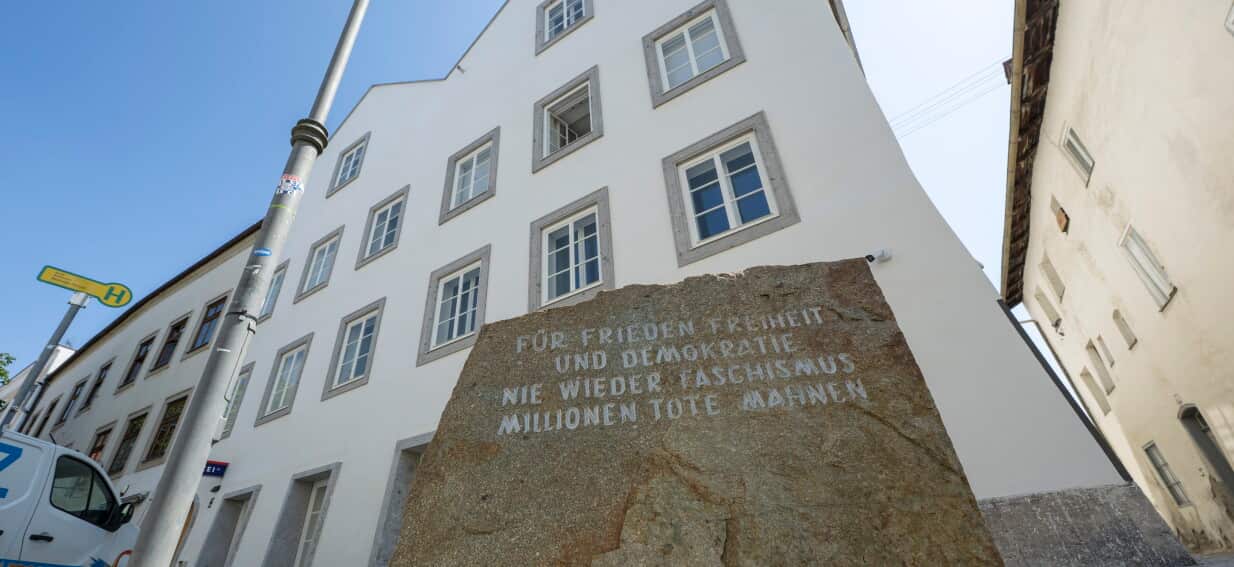
BRAUNAU AM INN, AUSTRIA – A century after Adolf Hitler’s sinister rise began, the house where he first drew breath in the quiet Austrian town of Braunau am Inn has undergone a profound transformation. What was once an inadvertent pilgrimage site for neo-Nazis and right-wing extremists is now being refashioned into what authorities hope will be a potent symbol of democratic values and law enforcement, deliberately severing its links to the darkest chapter of 20th-century history.
The large, butter-yellow building, mere kilometres from the German border, has long been a source of national discomfort and international fascination. For decades, Austrian governments wrestled with its fate, fearing that demolition might be misconstrued as an attempt to erase history, while leaving it untouched risked glorifying a tyrannical past. SBS News Top Stories reported that this extensive remodelling is designed to “prevent any association with Adolf Hitler”, marking a definitive shift in strategy from mere containment to active repurposing.
From Shrine to Shield: The Police Station Plan
The most significant aspect of the renovation is its future purpose: the building will house a police station. This choice is deliberately symbolic. The presence of law enforcement within its walls aims to project an image of authority, order, and democratic protection – an “exact opposite symbolism” to the extremist ideologies Hitler espoused. The transformation, estimated to cost AU$8.5 million (around €5 million), began in late 2023 and is anticipated to conclude in 2026. Architectural plans include significant alterations to the facade and interior layout, ensuring the building’s original, recognisable features are subsumed into its new identity.
According to Austrian officials, the goal is not to deny history but to reclaim the narrative surrounding the site. For years, the house, previously leased from its private owner, stood empty, a silent magnet for those who sought to glorify its most infamous former resident. This emptiness, however, only amplified its unintended symbolic power. By installing a police precinct, authorities hope to dilute any lingering reverence and instead project a message of intolerance towards extremist thought.
Architectural Intervention: Erasing an Aura
The architectural firm responsible for the redesign, Marte.Marte Architects, faces the delicate challenge of preserving the building’s structural integrity while erasing its unwanted aura. The changes are not superficial cosmetic enhancements; they are intended to fundamentally alter the building’s appearance and internal functionality. This involves significant internal reorganisation to accommodate police operations, as well as external modifications that will change its distinct residential character. For many years, the house was subject to contentious legal battles, culminating in its expropriation by the Austrian state in 2016 from its previous owner, who had refused to sell or undertake necessary renovations, further complicating its future.
The project has not been without its critics. Some historians and commentators have argued that demolition might have been a more decisive statement, while others suggest a museum dedicated to the victims of Nazism would have been more appropriate. However, the Austrian government has remained steadfast in its commitment to the police station plan, viewing it as the most effective means to achieve their twin goals of denazification and public safety.
A Nation Confronts its Past
Austria's relationship with its Nazi past is complex and often fraught. For decades after World War II, the nation largely viewed itself as Hitler's first victim rather than a willing participant in his atrocities. In recent years, however, there has been a more direct and critical confrontation with this history, driven partly by educational initiatives and a recognition of the need to actively combat resurgent extremist ideologies. The transformation of Hitler’s birthplace is a tangible manifestation of this evolving national self-reflection.
The government's proactive approach signals a clear message to neo-Nazis and sympathisers worldwide: this site will no longer serve as a monument to their divisive cause. Instead, it will stand as a testament to the resilience of democratic institutions and a permanent reminder that the principles Hitler championed have no place in contemporary society. The AU$8.5 million investment therefore represents not just a construction project, but a significant cultural and political statement, hoping to rewrite the symbolism of a location forever etched into the annals of infamy.