
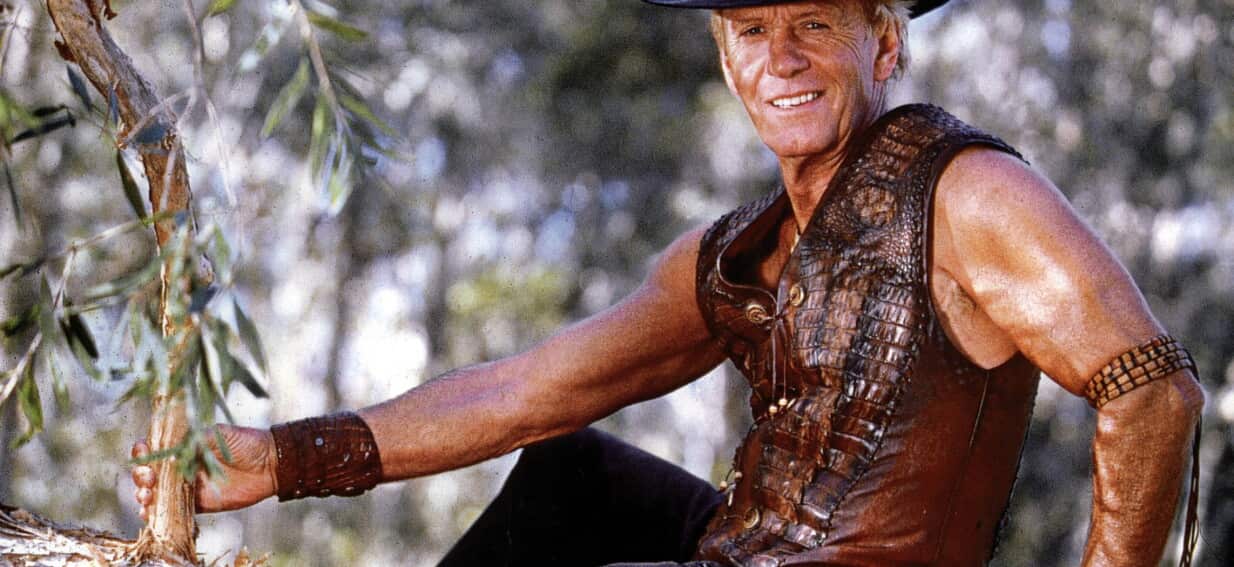
Australian icon Paul Hogan has unleashed a blistering broadside at One Nation leader Pauline Hanson, deriding her as a 'pelican' and staunchly defending Australia's multicultural fabric. The legendary actor's fiery comments follow a contentious National Press Club address by Senator Hanson, which appears to have triggered a notable decline in her public approval.
Hogan, renowned globally for his role as 'Crocodile' Dundee and his 'Come Say G'day' tourism campaigns, weighed in on the political stoush with characteristic bluntness, rejecting Hanson’s assertions about Australian identity. His intervention comes as new data – as reported by SBS Australia – indicates a significant downturn in Senator Hanson’s popularity in the wake of her high-profile speech. While specific figures were not detailed by SBS, the report highlighted a clear negative trajectory for the One Nation leader's standing amongst voters.
Hogan Unleashes 'Pelican' Barb
The 84-year-old actor, who has largely remained out of the public eye in recent years, broke his silence to directly address Senator Hanson’s recent comments. Hogan's 'pelican' jibe, a colloquial Australian term often used to describe someone foolish or unintelligent, underlines the depth of his disagreement with her rhetoric. His remarks signal a strong rejection of any narrative that suggests Australia is, or should be, a monocultural nation, a theme that has long been central to One Nation's platform.
Sources close to Hogan suggest his defence of multiculturalism stems from a deeply held belief in the inclusive spirit that has defined modern Australia. This perspective contrasts sharply with Senator Hanson's often polarising views on immigration and cultural diversity, which she reiterated during her National Press Club appearance. Her speech reportedly focused on concerns about national identity and social cohesion, topics that frequently resonate with her voter base but often draw criticism from broader segments of the Australian public.
Hanson's Approval Takes a Hit
SBS Australia's report on Senator Hanson’s declining approval ratings highlights the immediate and tangible impact of her recent public statements. While specific polling numbers or methodologies were not disclosed by SBS, the implications are clear: her performance at the National Press Club, a pivotal platform for political leaders, appears to have alienated a segment of the electorate. This dip in approval could pose challenges for One Nation as the political landscape continues to shift, particularly in states where the party typically garners significant support.
Political analysts are beginning to dissect the long-term implications of this downturn, considering whether it represents a temporary blip or a more significant erosion of trust. The timing of Hogan’s intervention, coinciding with this dip, adds another layer to the public discourse, potentially emboldening critics of One Nation and giving pause to some of its supporters.
Defending the Aussie Melting Pot
Hogan's staunch defence of Australia's multiculturalism resonates with many who view the nation's diversity as a pillar of its strength and identity. His comments implicitly champion an Australia that embraces different cultures, languages, and traditions, rather than advocating for a singular, uniform national character. This vision stands in direct opposition to Senator Hanson’s frequent calls for a more homogenous society, which she argues is essential for preserving Australian values.
The debate over immigration and national identity continues to be a recurring theme in Australian politics, with figures like Hogan and Hanson representing vastly different perspectives. Hogan's unexpected entry into this discussion injects a powerful, non-political voice into the fray, reminding the public of the broad appeal and acceptance of multiculturalism across various sections of Australian society. The unfolding dynamic between these two iconic, albeit vastly different, Australian figures is set to capture further public attention in the coming weeks.
Ultimately, the clash between Hogan's inclusive vision and Hanson's more isolationist stance underscores a fundamental ideological divide within the nation. As Australia grapples with its identity in the 21st century, the words of both a screen legend and a political firebrand continue to shape the conversation.