
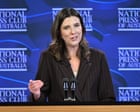
Sydney's political landscape is abuzz following the announcement by local independent Hannah Ferguson that she will challenge Prime Minister Anthony Albanese in his inner-west Sydney electorate of Grayndler at the next federal election. Ferguson, a self-described challenger to a 'cynical outlook of politics,' believes her campaign can inject a fresh perspective into Australian democracy.
Her declaration, initially reported in Guardian Australian politics, has sent ripples through the political establishment, sparking widespread discussion about the enduring appeal of independent candidates and the vulnerabilities even long-serving MPs can face. Grayndler has been Albanese's federal seat since 1996, and he holds it with a substantial margin of over 12 per cent.
Unpacking the Motivation
Ferguson's core motivation stems from a profound dissatisfaction with what she perceives as a political system that has inadvertently paved the way for divisive figures. While she doesn't name specific examples in detail within her initial statement, her reference to 'the success of Pauline Hanson' strongly suggests a critique of mainstream party politics and its perceived failure to address underlying societal concerns.
She articulated a desire to 'stand up to a system that has facilitated' such outcomes, indicating a broader ideological stance against what she views as a flawed political architecture. This stance positions her not merely as a local grievance candidate, but as someone aiming for systemic change through individual action. Her challenge isn't just to Albanese, but to the established order she believes he represents, despite his progressive credentials.
A Groundswell of Support (and Scrutiny)
The initial reaction to Ferguson's candidacy has been described by her as 'overwhelming and largely positive.' This suggests a degree of discontent within the Grayndler electorate, or at least a willingness to engage with alternative voices, even if the seat is considered a Labor stronghold. However, Guardian Australian politics also noted that Ferguson acknowledged facing criticism, distinguishing between 'good faith' concerns and ad hominem attacks.
She specifically highlighted 'men calling me an attention-seeking influencer,' dismissing such remarks as par for the course in a democracy. This early brush with online detractors underscores the often-unflattering reality of entering the political arena, particularly as a prominent independent challenger to a national figure. The challenge for Ferguson will be to harness the 'positive' sentiment while deflecting or addressing the criticisms leveled against her.
Grayndler's Independent Potential
Historically, Grayndler has been a safe Labor seat, and ousting Prime Minister Albanese would be an immense undertaking. However, the rise of powerful independent campaigns in recent federal elections, particularly the 'teal' independents, has demonstrated that no seat is entirely immune to a well-resourced and locally focused challenge. While Ferguson's campaign is in its nascent stages, her willingness to directly take on the nation's leader could galvanise a particular segment of voters.
Her success will hinge on her ability to articulate a clear platform that resonates with Grayndler residents, differentiate herself from the Prime Minister on substantive policy issues, and build a robust volunteer and fundraising base. The inner-west electorate, with its progressive leanings and strong community activism, could arguably be fertile ground for an independent candidate campaigning on issues of integrity, climate action, and systemic political reform.
The Road Ahead for Ferguson
As the federal election draws closer, Ferguson's campaign will undoubtedly intensify. Her initial foray into national politics has already generated significant media attention and sparked debate, fulfilling at least one of her stated aims: to challenge the existing political narrative. The coming months will reveal whether her 'refusal to allow a cynical outlook of politics infect our country' translates into a genuine threat to the Prime Minister's hold on Grayndler, or if it remains a symbol of an increasingly diverse and unpredictable Australian political landscape.