
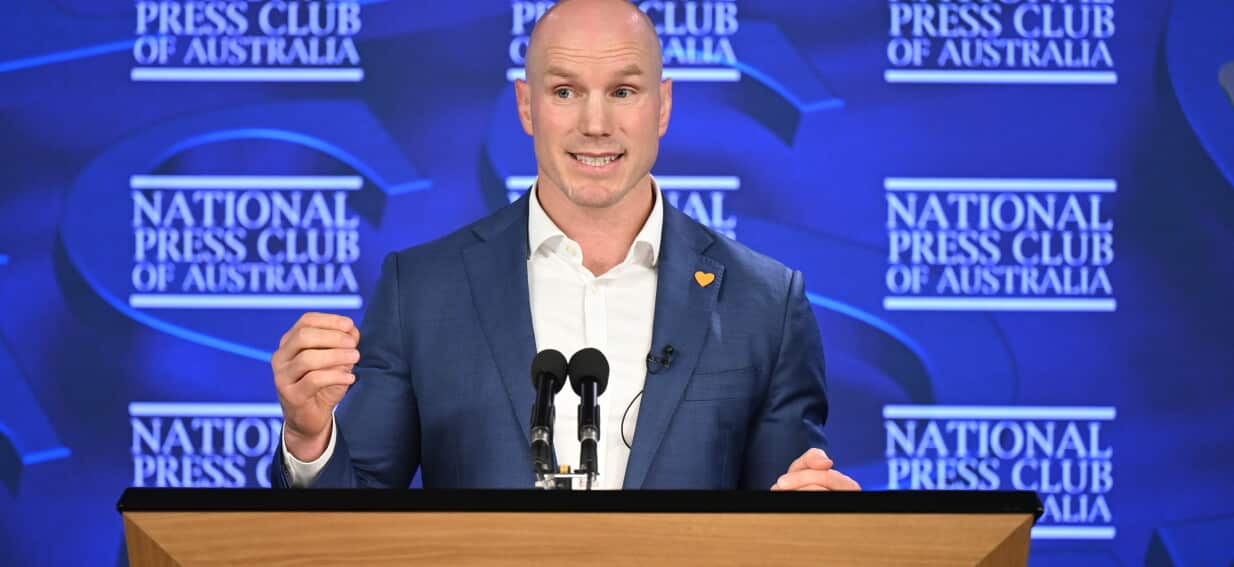
Independent senator David Pocock has called for a targeted levy on multinational technology firms, framing the measure as essential to rebalancing Australia’s revenue base and challenging the major parties’ economic priorities.
Shifting the tax burden to digital giants
Addressing the National Press Club in Canberra, the ACT crossbencher took aim at the outsized influence of global digital conglomerates, questioning political complacency towards foreign corporate operations. As SBS News Top Stories reported, Senator Pocock challenged colleagues across the political divide over their reluctance to curb the market dominance of international platforms, sharply questioning lawmakers who align with entrenched "tech bro" interests over everyday citizens.
Under Pocock’s proposed framework, a dedicated levy would be levied against the country's most profitable technology operators. Revenue generated from the scheme would be channelled into funding under-resourced public services, regional infrastructure, and local community projects. Proponents of digital taxation argue that multinational platforms extract immense commercial value from Australian user data and advertising markets while routinely routing substantial earnings through lower-tax offshore jurisdictions.
Reimagining the parliamentary balance
Beyond fiscal reform, the address served as an expansive manifesto for political realignment in Canberra. Pocock argued that Australia's traditional two-party duopoly is structurally ill-equipped to address long-term intergenerational inequities, mounting climate transition costs, and declining civic trust.
The former Wallabies captain, whose surprise 2022 election victory ended the Liberal Party’s historic hold on an ACT Senate seat, positioned the federal crossbench as an indispensable check on executive overreach. Rather than treating minority parliaments as an aberration, Pocock asserted that collaborative, independent representation produces superior legislative scrutiny and diminishes the sway of corporate lobbying groups within ministerial corridors.
Structural deficits and competing budget demands
The proposed digital levy lands amid an intensifying national debate regarding Canberra’s medium-term structural deficit. Successive federal treasuries have confronted escalating expenditure across aged care, the National Disability Insurance Scheme, defence acquisitions, and debt servicing obligations.
While the Albanese government has delivered back-to-back budget surpluses driven by temporary commodity windfalls, fiscal analysts consistently warn that baseline revenues remain excessively reliant on personal income tax receipts. Tax reform advocates have long contended that capturing a fairer share of digital economic activity represents one of the few practical mechanisms available to commonwealth budget planners seeking to alleviate the tax burden carried by individual wage earners.
Navigating the Senate crossbench gauntlet
Pocock’s intervention signals a recalibration of crossbench demands ahead of the forthcoming federal election. With the Labor government frequently requiring Pocock’s vote alongside the Greens to pass contested workplace, environmental, and infrastructure legislation, the senator's policy priorities carry substantial legislative weight.
While treasury ministers have traditionally adopted a cautious approach to unilateral digital levies—partly out of concern over retaliatory trade measures from Washington—Pocock’s stance will heighten scrutiny over corporate compliance. For Canberra’s policy architects, the proposal delivers an explicit challenge: confront the influence of multinational technology behemoths or face an increasingly assertive crossbench intent on rewriting the rules of national politics.


