
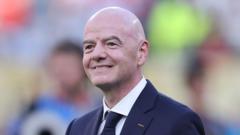
Seemingly undeterred by mounting international condemnation over Qatar’s human rights record and FIFA's role in the controversial tournament, President Infantino launched a remarkable defence of himself and the organisation this week.
His defiant comments, reported by BBC World, come as the world’s most prestigious football tournament draws near, shadowed by intense scrutiny and global pressure regarding migrant worker exploitation, LGBTQI+ rights, and the ethical foundations of the World Cup host nation.
A Call for Calm in the Face of Criticism
Infantino’s advice – to “meditate, pray or watch a football match” – was delivered during a press briefing that quickly veered from standard World Cup preparations to a fervent personal address. The FIFA chief suggested such activities would help detractors cease “spreading hate and false rumours” about him and the contentious global event. The unprecedented call for spiritual introspection or sporting distraction illustrates the growing frustration within FIFA’s upper echelons as the Qatar 2022 tournament approaches amidst a storm of negative press and widespread calls for boycotts or protests.
Unpacking the Host Nation's Controversies
The lead-up to the Qatar World Cup has been particularly fraught. Allegations of thousands of migrant worker deaths and injuries during stadium construction, coupled with Qatar’s criminalisation of same-sex relationships and restrictions on basic human rights, have cast a long shadow over the event. Numerous human rights organisations, sporting bodies, and even national teams have voiced serious concerns, demanding greater accountability and protections for all involved. Charities and activist groups have called for FIFA to establish a compensation fund for affected workers, a demand that has gained considerable traction in Europe, though met with resistance from the organising body.
Australian Dollars and Ethical Dilemmas
The ethical quandaries surrounding Qatar 2022 resonate particularly strongly in Australia, a nation with a rich sporting culture and a growing awareness of corporate social responsibility. Australian football fans and media have closely followed the unfolding saga, debating the appropriate response from Football Australia and individual players. The financial implications for FIFA, however, remain astronomical. The event is projected to generate billions in revenue, with broadcasting rights, sponsorships, and ticket sales translating into substantial profits. For FIFA, the show, and indeed the money, must go on, despite the human cost.
The Lingering Stain of Transparency
Infantino's rhetoric also follows years of controversy surrounding FIFA itself, including the bribery scandal that rocked the organisation in 2015, leading to the departure of his predecessor, Sepp Blatter. While Infantino was elected on a platform of reform and transparency, critics argue that the decision to award the World Cup to Qatar, made prior to his tenure, and the subsequent handling of related issues, continue to undermine trust in FIFA's governance. The perception of opacity and a lack of genuine commitment to human rights reform persist, despite FIFA's assurances. Infantino’s latest comments are unlikely to quell these deep-seated concerns, serving instead to further entrench the divide between FIFA and its many critics ahead of what promises to be one of the most scrutinised World Cups in history.