
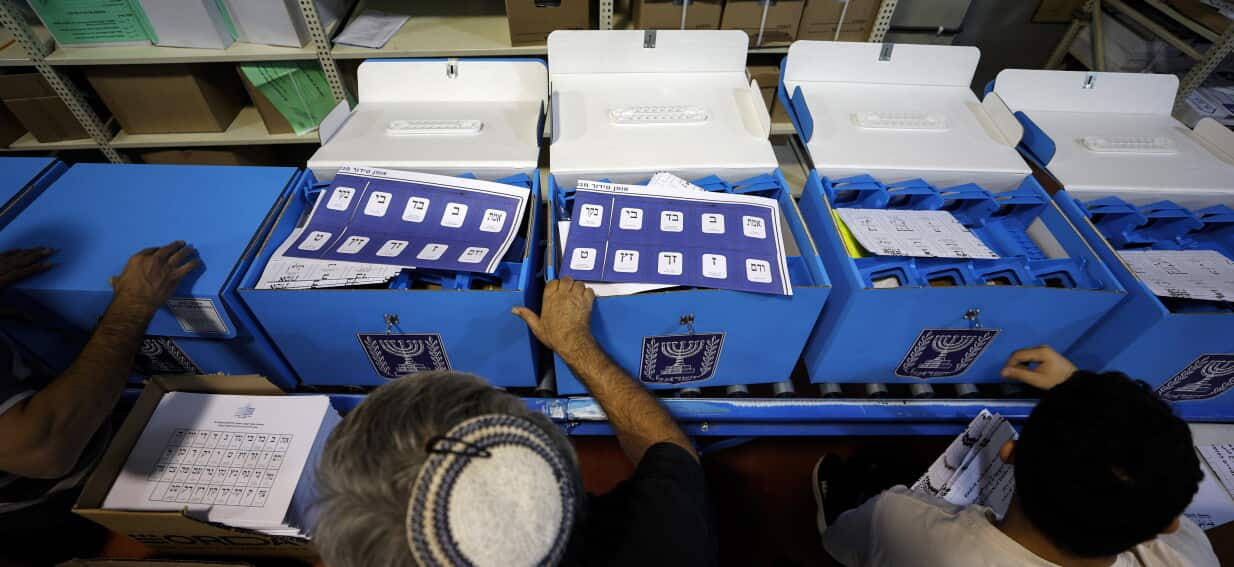
Israelis have returned to polling booths across the country in a fiercely contested national election, confronting a fractured political landscape that threatens yet another protracted stalemate in Jerusalem.
With voting under way from the Mediterranean coast to the Galilee, ballot boxes opened under tightened security as rival factions made their final appeals to undecided voters. SBS World reported that the contest has laid bare sharp ideological rifts, leaving open the central question of whether any single political alliance can assemble the 61-seat majority required to form a durable government in the 120-seat Knesset.
A deeply divided electorate returns to the ballot box
The ballot marks the latest chapter in years of persistent political instability, characterised by razor-thin margins and repetitive election cycles that have tested voter patience and strained public institutions. Polling stations across major population centres, including Tel Aviv, Jerusalem, and Haifa, reported steady queues from early morning, with electoral authorities urging citizens to exercise their democratic mandate despite widespread cynicism over whether this vote will resolve the underlying legislative paralysis.
Electoral officials have deployed thousands of monitors and police officers to ensure integrity across voting precincts. SBS World reported that party organisers were focusing intense turnout efforts on peripheral towns and contested demographic heartlands, where a swing of just a few thousand votes could determine whether smaller parties clear the statutory 3.25 per cent electoral threshold needed to enter parliament.
The coalition arithmetic facing the Knesset
At the heart of the contest is an intricate numbers game that defies straightforward ideological classification. Israeli governance relies fundamentally on broad multi-party alliances, but deep personal enmities, divergent security perspectives, and competing visions regarding religious and secular public life have rendered traditional coalition-building exceptionally volatile.
Parties representing religious-nationalist, centrist, and secular factions are vying alongside Arab-led lists, all seeking leverage in what analysts predict will be weeks of bitter backroom haggling once the official tally is confirmed. Failure by minor partners to cross the electoral threshold would disproportionately benefit rival blocs, effectively redrawing the parliamentary arithmetic overnight and potentially leaving prime ministerial hopefuls unable to cobble together a workable administration.
Canberra keeps watch on regional stability
The outcome is being monitored closely in Canberra and foreign capitals throughout the region, where diplomatic officials are evaluating the potential reverberations for Middle Eastern regional security, ongoing trade ties, and international accord frameworks.
Bilateral relations between Australia and Israel, alongside Australia's diplomatic engagement in the broader region, remain closely linked to the geopolitical trajectory chosen by the incoming government in Jerusalem. Any shift in domestic policy or cabinet composition will also affect international discussions over regional security initiatives and broader global alliances.
Exit polls are scheduled to be published immediately after voting stations close late this evening, offering the first definitive indication of parliamentary seat allocations before official counting continues through the night.
