
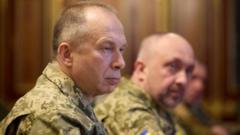
Kyiv, Ukraine – A deepening crisis is gripping Ukraine's leadership, with escalating street protests demanding a radical overhaul of its military command structure amidst the ongoing conflict with Russia. Protesters have issued an ultimatum: dismiss the recently appointed Commander-in-Chief, Oleksandr Syrskyi, and reinstate the popular former Defence Minister, Mykhailo Fedorov, by Friday.
The unrest, widely reported by BBC World, highlights growing public dissatisfaction with the direction of the war effort and the perceived competence of the current military leadership. The ultimatum sets a tense deadline for President Volodymyr Zelenskyy’s administration, already grappling with the immense pressures of wartime governance and a grinding front line.
Pressure Mounts on Zelenskyy
Demonstrators, many of whom are relatives of soldiers or displaced citizens, have gathered outside government buildings, chanting slogans and brandishing placards critical of General Syrskyi. Their demands reflect broader anxieties about strategic decisions and troop welfare. The move to oust Syrskyi comes barely weeks after his contentious appointment, which saw the popular General Valerii Zaluzhnyi removed from his post, sparking concerns about internal divisions within Ukraine's military and political elite.
Analysts suggest the public's swift disaffection with Syrskyi stems from a combination of factors, including his perceived association with high casualty rates in previous campaigns and a lack of public persona compared to his predecessor. The pressure on President Zelenskyy to respond to these demands is immense, as failure to do so could further erode public trust and potentially embolden Moscow.
The Fedorov Factor: A Hope for Change?
The clamour for Mykhailo Fedorov's return as Defence Minister is particularly noteworthy. Fedorov, who previously held the digital transformation portfolio, earned a reputation for innovation and transparency. His tenure saw significant advancements in military technology and supply chain efficiencies, which resonated positively with a war-weary public craving competence and accountability. Sources close to the government, speaking anonymously, suggest that Fedorov’s strategic vision and modern approach are seen by many as a stark contrast to the more traditional military leadership represented by Syrskyi.
Beyond public perception, Fedorov's re-appointment would represent a symbolic victory for those advocating for a more technologically advanced and less bureaucratic defence establishment. The comparison between the two figures underscores a fundamental debate within Ukraine about the best path forward for its military in the face of sustained Russian aggression.
Economic Fallout and International Scrutiny
The political instability unfolding in Kyiv is not without its economic repercussions. The Australian dollar, like other major currencies, has seen slight fluctuations against the Ukrainian Hryvnia amidst the uncertainty. International observers and allies, including Australia, are closely monitoring the situation. A senior analyst at the Australian National University noted, on condition of anonymity, that while internal politics are expected during wartime, prolonged instability in Ukraine's leadership could complicate the flow of crucial military and financial aid from Western partners.
The coming days will be critical for President Zelenskyy as he navigates this intricate political landscape. Meeting the protesters' demands could signal a responsiveness to public will but also expose potential weaknesses in his leadership. Conversely, ignoring the calls could risk alienating a significant portion of the population and create further disunity at a time when national cohesion is paramount. All eyes remain on Kyiv as the Friday deadline looms, with the future of Ukraine's military command – and potentially its war effort – hanging in the balance.