
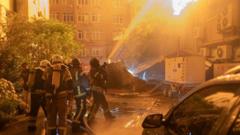
Kyiv was plunged into a nightmare yesterday morning as a barrage of Russian missiles and Iranian-made ‘kamikaze’ drones slammed into the Ukrainian capital and other major cities, marking the most significant aerial assault in weeks. The brutal dawn attacks left at least eight people dead and dozens more injured, targeting critical infrastructure and residential areas across the war-torn nation.
The widespread devastation unfolded just hours after Ukrainian President Volodymyr Zelensky issued a stark warning, stating that Russia was planning "massive" attacks. His ominous prediction became a grim reality as explosions rocked Kyiv, Lviv, Dnipro, and Zaporizhzhia, sending shockwaves of fear and destruction through civilian populations.
Residential Areas Targeted in Capital
In Kyiv, residents awoke to the terrifying whistle of incoming ordnance and the thunderous roar of explosions. Emergency services reported numerous strikes on densely populated residential districts, with some buildings sustaining significant damage. Footage emerging from the capital showed burning cars, shattered windows, and emergency crews battling blazes amidst the rubble. Ukrainian officials swiftly condemned the attacks as acts of terrorism deliberately aimed at civilian targets during peak morning travel.
One missile reportedly struck a children's playground in the Shevchenkivskyi district, a central area of Kyiv. While no casualties were immediately reported from that specific incident, it underscored the indiscriminate nature of the assault. Early reports indicated power outages in several key cities, suggesting Russia's continued strategy of targeting Ukraine's energy infrastructure as winter approaches.
International Alarm and Escalating Tensions
The coordinated missile and drone strikes elicited immediate condemnation from international bodies. United Nations Secretary-General António Guterres expressed deep concern over the escalating violence, reiterating calls for an immediate cessation of hostilities. European Union leaders, including European Council President Charles Michel, branded the attacks as "atrocious" and pledged further support for Ukraine.
The attacks signify a dramatic escalation of the conflict following recent military setbacks for Russia, particularly the partial destruction of the Kerch Bridge connecting Russia to annexed Crimea. While Moscow has not explicitly linked the missile barrage to the bridge incident, analysts suggest it represents a retaliatory measure intended to reassert Russian military might and sow terror among the Ukrainian populace. This latest wave of assaults follows a period where Kyiv had experienced relative calm compared to the war's initial stages.
Ukraine Appeals for Enhanced Air Defence
The Ukrainian Ministry of Defence reiterated its urgent calls for advanced air defence systems from Western allies. As BBC World reported, Ukrainian officials have repeatedly stressed that while their existing air defences are capable, they are insufficient to protect against such widespread and sophisticated attacks. Each incoming missile and drone places immense strain on remaining resources and necessitates improved capabilities to intercept Russian ordnance before it reaches its targets.
Australia's Department of Foreign Affairs and Trade (DFAT) has again called on Australian citizens to depart Ukraine immediately if it is safe to do so, reiterating its highest 'Do Not Travel' advisory for the entire country. The Australian Government previously announced an additional package of military assistance to Ukraine, including an extra 30 Bushmaster protected mobility vehicles, bringing Australia's total contribution to approximately AUD $655 million since the conflict began in February.