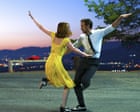
Ten years on from its dazzling premiere, the beloved musical 'La La Land' is once again making headlines, not for a sequel, but for a subtle — yet significant — alteration to its iconic movie poster. Ryan Gosling's famously bent wrist, a distinctive feature of his dance pose alongside co-star Emma Stone, has been straightened in a newly released 10th-anniversary visual, igniting a fervent discussion across social media and film circles.
According to Guardian Australia Culture, the 'minor adjustment' comes after a decade of reported complaints from Gosling himself regarding the perceived awkwardness of his 'La La Hand'. While the modification might seem trivial to the uninitiated, it has sparked outrage among a dedicated fanbase who view it as an erasure of film history.
The Curious Case of the Crooked Wrist
The original 2016 poster captured Gosling and Stone in mid-dance, a joyous, almost whimsical pose that perfectly encapsulates the film's nostalgic charm. Gosling's left hand, bent at the wrist and held aloft, became an instantly recognisable element, affectionately dubbed his 'gay little wrist' by some fans on social media, as evidenced by a Vulture headline referenced in the Guardian Australia Culture report. This seemingly innocuous detail has now been digitally 'corrected', presenting a straightened, more conventional wrist in the anniversary artwork released by Lionsgate.
The swift removal of what some considered a unique, even endearing, quirky detail has left many fans feeling bewildered and, in some cases, genuinely angry. The debate centres on whether a deliberate artistic choice, or perhaps even an accidental yet charming imperfection, should be retroactively altered, especially for a widely celebrated and culturally significant piece of cinema.
Fan Fury and the Fight for Fidelity
Social media platforms have become a battleground for devotees of the Oscar-winning film. Comments range from nostalgic exasperation, with users demanding the return of 'Ryan Gosling’s Gay Little Wrist', to more analytical critiques concerning the precedent this sets for the preservation of original cinematic marketing. The sentiment among many is clear: the original poster was a part of the film's legacy, an artifact that should remain untouched.
Guardian Australia Culture highlighted the widespread indignation, indicating that this isn't merely about a wrist but about the integrity of the original artistic output. Fans are questioning the motivation behind the change, wondering if it was a genuine artistic update or a concession to a celebrity's personal preference, even if that celebrity is as beloved as Gosling.
Erasing History or Enhancing Art?
This incident raises pertinent questions about the evolving nature of art and its reception in the digital age. Is it acceptable to 'correct' historical artworks based on contemporary sensibilities or, in this case, a personal aesthetic preference? While the alteration is minor in the grand scheme of the film's 2 hour and 8-minute runtime, its impact on the film's visual iconography is undeniable.
For many, the slightly bent wrist was part of the poster's charm, an imperfect detail that added character and authenticity to the image. Its removal is seen by some as an attempt to sanitise or perfect something that was already perfect in its original form. The cost of a new print run for the anniversary poster would likely be negligible in the multi-million dollar film industry, with Lionsgate potentially investing hundreds of thousands of Australian dollars in marketing materials, making the decision to alter a detail rather than create entirely new imagery even more intriguing.
The Broader Implications for Pop Culture
This 'La La Hand' controversy could have broader implications for how studios approach anniversary editions and re-releases of films. As digital tools become more sophisticated, the temptation to 'tweak' or 'improve' original content may grow. However, as the reaction to the 'La La Land' poster demonstrates, there is a strong desire among consumers for the preservation of original artistic works, even down to the smallest detail.
The debate serves as a reminder that pop culture artifacts, including movie posters, are more than just promotional material; they are integral parts of a film's identity and its place in cultural memory. The question now remains whether Lionsgate will offer an explanation for the contentious change or if Gosling's 'La La Hand' will forever be a point of digital contention.