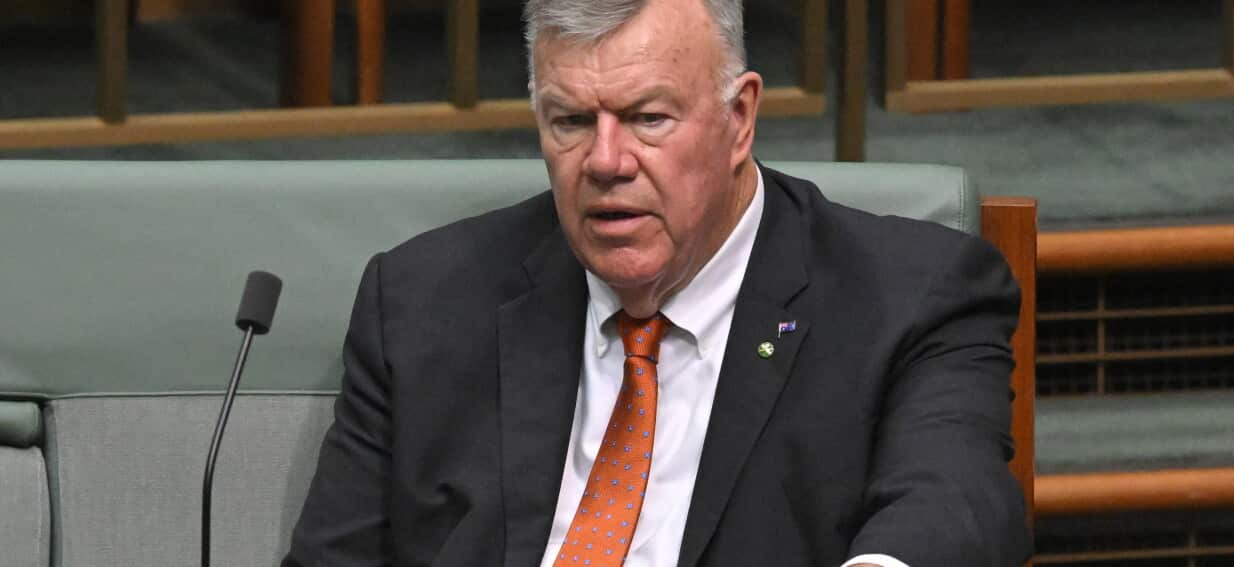
The Albanese government has rejected explosive claims from One Nation leader Pauline Hanson that Labor attempted to entice parliamentarian David Farley to defect by dangling lucrative taxpayer-funded staffing incentives.
Senator Hanson alleged that government figures sought to destabilise her party by orchestrating a high-level defection, claiming intermediaries approached Mr Farley with the promise of an additional, highly remunerated staff member to secure his allegiance. The assertions were firmly rebuffed by government representatives, who insisted the party had engaged in no such recruitment drive, describing the One Nation leader as jumping at shadows.
Claims of taxpayer-funded staffer inducements
The controversy centres on accusations that ministerial backchannels attempted to exploit parliamentary resource allocations for partisan advantage. As SBS News Top Stories reported, Senator Hanson insisted that Mr Farley was directly targeted with an offer designed to bolster his personal office budget at significant public expense.
In Canberra, the distribution of electorate and personal staff is governed by the Members of Parliament (Staff) Act, with additional staffer allocations frequently serving as a contentious instrument of executive patronage. Crossbench parliamentarians routinely negotiate for increased administrative support to handle complex legislative loads. However, tying such resources explicitly to floor-crossing or formal party switches would constitute a severe breach of political conventions and invite intense integrity scrutiny.
Government brushes off 'shadows' in denial
Labor figures moved swiftly to extinguish the claims, categorising the allegations as an unsubstantiated distraction fabricated by a minor party nervous about internal solidarity. Ministers maintained that normal consultative lines with the crossbench remain transparent and focused entirely on policy negotiation rather than covert poaching campaigns.
Government sources indicated that while ministers regularly engage with minor-party members to gauge sentiment on contentious economic and environmental bills, accusations of improper inducements misrepresent routine parliamentary dialogue. They maintained that Senator Hanson's public denunciation reflects internal anxieties rather than any concrete operation engineered from the government benches.
The tight arithmetic of crossbench negotiations
The political skirmish highlights the fragile balance of power within the Commonwealth Parliament, where the passage of signature legislation depends on assembling shifting coalitions across the Senate and House benches.
With both major parties acutely aware of the leverage held by non-aligned and minor-party votes, individual MPs and senators often find themselves subjected to sustained courtships by rival camps. One Nation has historically maintained an uneasy relationship with both Labor and the Coalition, regularly capitalising on its balance-of-power status to demand concessions for regional and conservative constituencies. Any disruption to the party's ranks would inevitably alter the arithmetic governing committee inquiries and legislative bargaining.
Entitlements under renewed Canberra scrutiny
The dispute also reopens perennial debates concerning the transparency of parliamentary resourcing and the potential for staff entitlements to be leveraged as political capital. Independent observers have long cautioned that discretionary allocations granted by the Special Minister of State operate with minimal public oversight.
While Labor maintains that its engagements across the chamber adhere to appropriate administrative standards, the episode guarantees that future crossbench negotiations will unfold under heightened scrutiny, as minor parties remain vigilant against perceived attempts to erode their parliamentary standing.