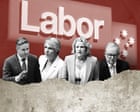
For the first time in its history, the Australian Labor Party boasts a majority of women in its caucus. This significant milestone was further underscored last week with the elevation of former minister Kate Ellis to national president, heading an all-female executive team within the party's organisational wing.
Ellis's appointment, alongside two female vice-presidents, marks a watershed moment for gender representation at the top echelons of one of Australia's major political forces. She now joins the ranks of powerful labour movement figures such as Australian Council of Trade Unions (ACTU) President Sally McManus and Secretary Michele O'Neil, highlighting a substantial shift in the gender dynamics of progressive politics.
A Female-Led Front, But Not For PM
While the ascendance of women within Labor's administrative and parliamentary structures is undeniable, an intriguing paradox has emerged. Despite their numerical dominance and increasing influence, discussions around who might succeed Anthony Albanese as prime minister rarely feature women prominently. This observation, first reported by Guardian Australian politics, raises serious questions about entrenched biases and the enduring challenges women face in reaching the ultimate political office.
The current landscape paints a picture of stark contrast. On one hand, Labor publicly champions diversity and inclusion, with these appointments being celebrated as tangible proof of progress. On the other, the informal — yet highly influential — conversations about future leadership continue to default to male contenders, often overlooking highly qualified and experienced female parliamentarians who are clearly demonstrating their capabilities.
The “Invisible” Successors
Political commentators and insiders frequently float names like Jim Chalmers and Tony Burke as potential future leaders, alongside others from the male-dominated frontbench. Yet, even with women making up a larger percentage of the caucus than men, and holding key ministerial portfolios, their names are conspicuously absent from these leadership discussions. This suggests a persistent, perhaps subconscious, bias that prevents the mental leap from competent minister to future Prime Minister when the individual is a woman.
This phenomenon is not unique to Australia, but it is particularly pertinent now given Labor's conscious efforts to elevate women within its ranks. The party has actively worked towards achieving gender parity through various mechanisms, including quotas and strong internal advocacy, which have demonstrably changed the composition of its parliamentary wing.
Bridging the Leadership Gap
The disjuncture between women's numerical strength and their perceived electability for the top job presents a critical challenge for Labor. It raises questions about whether the party's internal culture genuinely embraces female leadership at the highest level, or if there's an unspoken ceiling that remains firmly in place. Addressing this will likely require more than just increasing female representation; it will demand a fundamental shift in how leadership qualities are perceived and attributed within the party and, arguably, within the broader Australian political landscape.
As Kate Ellis and her all-female executive begin their work, their success in driving organisational change could inadvertently shine a brighter light on this leadership disparity. Their increased visibility might force a reassessment of the unspoken criteria for prime ministerial hopefuls, and perhaps, finally break through the invisible barrier that continues to deny highly capable women their rightful place in the national leadership conversation.