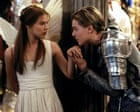
Thirty years after transforming fair Verona into a hyperactive, sun-bleached battlefield of warring corporate dynasties, director Baz Luhrmann’s Romeo + Juliet remains cinema’s most audacious gateway to William Shakespeare.
Released in late 1996, the maximalist Australian production did far more than introduce the tragedy of star-cross'd lovers to Generation X; it dismantled the staid, velvet-curtained conventions of classical theatre. By retaining the original Elizabethan verse while surrounding it with petrol station shootouts, silk Hawaiian shirts, and an electric pop soundtrack, Luhrmann forged a cultural touchstone that still commands reverence in secondary school classrooms across Australia and abroad.
From Strictly Ballroom to Verona Beach
As Guardian Australia Culture noted in a retrospective this week, the romantic tragedy served as a defining proving ground for Luhrmann’s trademark cinematic style. Fresh off the surprise international triumph of his 1992 debut Strictly Ballroom, the Sydney-trained filmmaker resisted the temptation to retreat into conventional Hollywood period drama.
Instead, he tackled Shakespeare’s foundational text with unapologetic sensory overload. Luhrmann and his regular co-screenwriter Craig Pearce relocated the feuding Montagues and Capulets to the fictional, sun-baked metropolis of Verona Beach, casting rising American talents Leonardo DiCaprio and Claire Danes in the title roles. The gamble yielded global box-office success and catapulted both young leads into Hollywood’s upper echelon, while demonstrating that Australian directors could radically reinvent highbrow Western literature without sacrificing commercial vitality.
Tabloid aesthetics and nineties angst
The film’s visual language captured a distinct mid-1990s cultural anxiety. Rather than staging duels with rapiers in cobblestone alleys, Luhrmann’s camera adopted the frantic vocabulary of twenty-four-hour rolling news and music television.
Guardian Australia Culture reported that the production drew heavily on the era's tabloid media fixations. The opening prologue was delivered not by an actor upon a wooden stage, but via a television newsreader framed within a cathode-ray set. Scenes of civilian strife were scored to screaming police scanners and grainy helicopter footage, mirroring the televised aerial circus of the 1994 O.J. Simpson car pursuit. The ancient blood feud was reframed as a territorial turf war between rival syndicates, directly channelling the decade’s artistic and political preoccupation with urban gangland culture.
The classroom’s enduring Trojan horse
Beyond its stylistic disruption, the production achieved an unexpected secondary legacy as an indispensable educational device. While canonical texts such as Macbeth or Hamlet frequently alienate younger readers with complex statecraft and existential soliloquies, Romeo + Juliet thrives on raw hormones and reckless adolescent impulsivity.
Luhrmann leaned deliberately into that emotional turbulence, providing English faculties with a reliable Trojan horse to demystify early modern verse for reluctant teenagers. Thirty years on, syllabus coordinators across the country continue to deploy the 1996 adaptation, proving that juxtaposing four-hundred-year-old dialogue against neon crucifixes and alternative rock remains an unmatched method for bridging the generational divide.