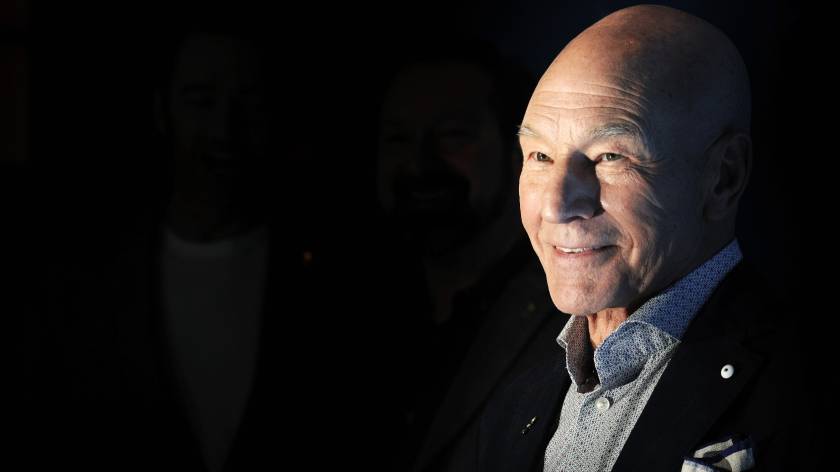
Stage and screen titan Sir Patrick Stewart has died aged 86, leaving behind a monumental artistic legacy defined as much by quiet intensity as theatrical grandeur across six decades.
While millions across the globe came to revere him as Starfleet’s definitive diplomat Captain Jean-Luc Picard or Marvel’s telepathic patriarch Professor Charles Xavier, it was an understated television cameo decades earlier that cemented his reputation among discerning critics.
As Crikey observed in an appraisal of his career following his death, Stewart’s singular presence and versatility were perhaps never more acutely demonstrated than in a celebrated, entirely wordless performance spanning ten minutes in the BBC’s 1979 adaptation of John le Carré’s espionage masterpiece, Tinker Tailor Soldier Spy.
The Masterstroke of Karla’s Silence
Playing the enigmatic Soviet spymaster Karla, Stewart shared a dingy Indian prison cell with Sir Alec Guinness, whose character George Smiley pleaded, reasoned, and unravelled before his ideological nemesis. Stewart uttered not a single syllable. Through little more than the flicker of an eye, the measured drag on a cigarette, and an inscrutable half-smile, Stewart commanded the screen, ultimately pocketing Smiley’s lighter in an act of calculated, silent contempt.
Crikey reported that this masterclass in physical discipline captured Stewart’s genius at its purest: an actor capable of exuding absolute authority and psychological menace without deploying his famously resonant, Shakespearean baritone.
Classical Discipline and Shakespearian Rigour
Born in Mirfield, in the West Riding of Yorkshire, in 1940, Stewart’s trajectory was forged in the demanding crucible of regional British theatre before joining the Royal Shakespeare Company in 1966. For more than fifteen years, he honed an immaculate vocal command and physical precision, tackling heavyweight classical roles from Macbeth and Shylock to Enobarbus.
That rigorous classical grounding proved decisive when Hollywood came calling in the late 1980s. When cast as Picard in Star Trek: The Next Generation, many American television executives questioned whether a bald, middle-aged British classical actor could lead a primetime sci-fi franchise. Stewart answered by redefining the archetype, infusing space opera with philosophical gravitas, moral authority, and high rhetorical elegance.
An Enduring Australian Footprint
Stewart’s theatrical devotion remained steadfast throughout his international screen success. Australian audiences were granted an indelible firsthand encounter with his stage craft in 2010, when he toured Sydney and Melbourne alongside longtime friend and collaborator Sir Ian McKellen in Samuel Beckett’s Waiting for Godot. The sold-out season at the Sydney Theatre company drew rapturous acclaim, showcasing a delightfully vaudevillian chemistry that contrasted sharply with his sterner screen personas.
His subsequent work, including his poignant twilight reprisal of Professor X in the 2017 feature Logan and his return to Star Trek: Picard, revealed an artist continually unpicking the vulnerabilities of ageing icons.
Whether holding court across interstellar frontiers or sitting across an interrogation table in complete silence, Stewart understood that true dramatic power lay in the pauses between words. His departure closes a golden chapter in Anglo-American acting, leaving behind a body of work that bridged high classical tragedy and popular mythmaking with effortless, unmatched distinction.