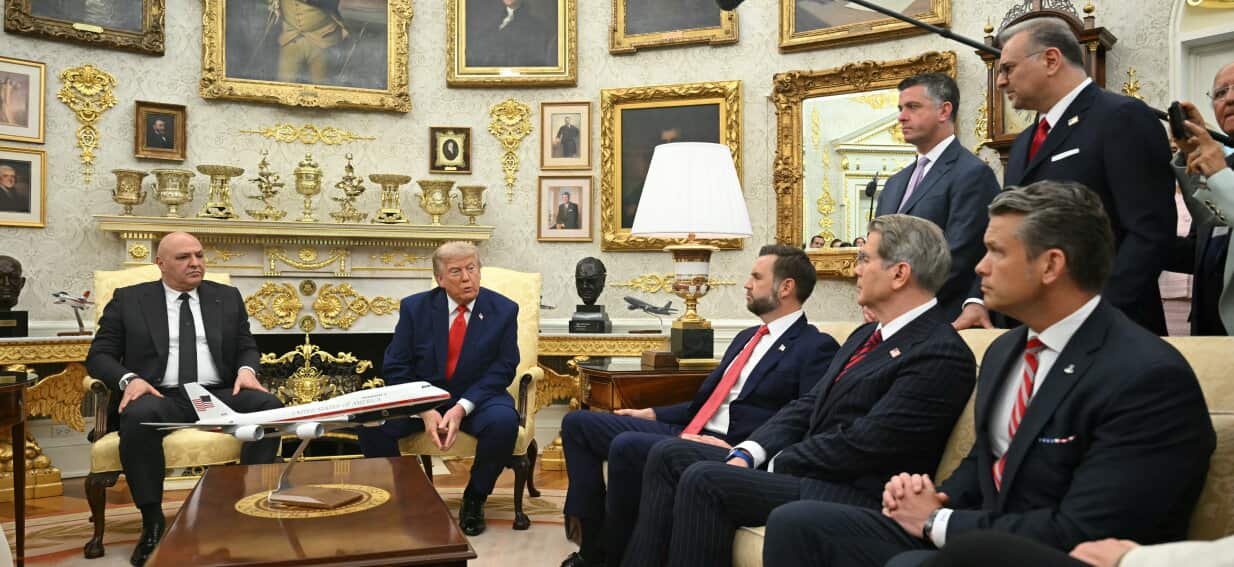
In a development that could reshape the geopolitical landscape of the Middle East, direct flights between Beirut and Tel Aviv are poised to recommence after a 40-year cessation. The breakthrough follows an unheralded intervention by former US President Donald Trump, who has reportedly pledged substantial US assistance to Lebanon, coinciding with renewed emphasis on a complete Israeli withdrawal from Lebanese territories.
The announcement, initially reported by SBS News Top Stories, signals a potentially radical shift in the long-strained relationship between the two nations, which have technically remained in a state of war since 1948. While details remain scant, the prospect of direct air travel alone represents an unprecedented step towards normalisation.
Trump's Timely Intervention
The unexpected re-emergence of Donald Trump on the international diplomatic stage has observers both intrigued and cautious. While his previous Middle East peace efforts yielded mixed results, his reported pledge to assist Lebanon ‘a lot’ appears to have been a crucial catalyst. Sources close to the negotiations suggest Trump's involvement has been instrumental in bridging long-standing impasses, offering a pathway for an economic lifeline to a nation grappling with profound financial woes.
Lebanon's economy has been in freefall for years, exacerbated by political instability, the devastating Beirut port explosion in 2020, and a severe banking crisis that has seen the Lebanese Pound plummet against major currencies. An influx of US aid, potentially running into hundreds of millions of Australian dollars, could provide much-needed relief to the Lebanese populace, currently facing hyperinflation and widespread poverty.
Aoun's Firm Stance on Withdrawal
Central to the emerging dialogue is Lebanese President Joseph Aoun’s unequivocal demand for a complete Israeli withdrawal from Lebanese territory. This long-held position, consistently reiterated by successive Lebanese governments, refers primarily to the Shebaa Farms, a small, disputed strip of land at the intersection of Lebanon, Israel, and Syria, as well as the Kfarshouba Hills and the northern part of Ghajar. Israel captured these areas in the 1967 Six-Day War, and Lebanon asserts its sovereignty over them, a claim supported by the United Nations.
President Aoun's insistence underscores that any normalisation of relations, including the resumption of flights, is contingent on addressing these foundational territorial disputes. The inclusion of this demand at the forefront of discussions suggests a more comprehensive approach to peace than previous, often segmented, negotiations.
Economic and Regional Ramifications
The resumption of direct flights, even symbolically, carries immense economic and cultural implications. For Lebanese and Israeli citizens, who often have familial ties severed by decades of conflict, direct travel would offer an invaluable connection. Currently, travel between the two nations is circuitous and arduous, often involving multiple transit points in third countries, adding significant cost and time.
Beyond humanitarian considerations, direct air links could unlock new avenues for trade, tourism, and cultural exchange, fostering a more integrated regional economy. While it's premature to predict an immediate economic boom, the potential for increased foreign investment and collaboration, particularly in sectors such as technology and healthcare, is significant. The normalisation could also pave the way for other nations in the region to reassess their own stances towards Israel, potentially leading to a broader regional détente. However, any such advancements would undoubtedly be met with scrutiny from various political factions within both Lebanon and Israel, as well as neighbouring states.
A Path Fraught with Challenges
Despite the palpable optimism surrounding these developments, the path ahead remains fraught with formidable challenges. The deeply entrenched political and religious divisions, the historical grievances, and the presence of powerful non-state actors like Hezbollah within Lebanon all present substantial hurdles. Any agreement would need to navigate these complex dynamics carefully, ensuring that all parties perceive tangible benefits and their core security concerns are addressed.
The immediate focus will be on the practicalities of re-establishing flight routes and ensuring the security protocols are robust. Furthermore, the specifics of Trump’s aid package and the timeline for Israel’s withdrawal remain key points of negotiation. While the resumption of flights is a tangible step, its long-term success will hinge on sustained political will and a genuine commitment from all stakeholders to build a lasting peace beyond mere symbolic gestures.