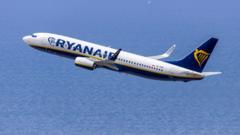
European budget airline giant Ryanair has revealed a substantial downturn in its financial performance, attributing the slump directly to the escalating geopolitical tensions in the Middle East. The Irish carrier reported a dip in its latest profit figures, as global oil benchmarks, particularly Brent crude, soared past the US$90 per barrel mark, significantly inflating operational costs.
The conflict, which has raised concerns about broader regional stability, is not only pushing up the price of aviation fuel but is also making potential travellers more hesitant to book flights, particularly for international routes. This dual impact of higher costs and dampened demand presents a challenging environment for airlines like Ryanair, which operate on notoriously slim margins.
Fuel Hike Ignites Cost Concerns
The most immediate and impactful consequence for Ryanair has been the dramatic increase in fuel expenses. Brent crude, a key international benchmark, has consistently traded above US$90 a barrel in recent weeks, a level not seen consistently for some time. For an airline, fuel represents one of the largest operational outlays, often accounting for a significant portion of a flight's cost. Any sustained increase in these prices directly erodes profitability, especially for a carrier known for its highly competitive fares.
While airlines typically employ hedging strategies to mitigate against volatile fuel price fluctuations, a prolonged period of elevated costs can test even the most robust hedging programmes. The BBC Business report highlighted this issue, noting that the sustained high oil prices were a primary factor in Ryanair's profit contraction, forcing the airline to absorb a substantial portion of these increased expenses.
Passenger Confidence Takes a Hit
Beyond the direct cost implications, the ongoing tensions in the Middle East have a chilling effect on consumer behaviour. Apprehension about potential travel disruptions, safety concerns, and economic uncertainties can lead to a noticeable drop in bookings. For a budget airline like Ryanair, which relies on high volumes of passengers filling seats, any dip in demand can quickly translate into reduced revenue.
While specific routes to the immediate conflict zone might see the most pronounced impact, the broader psychological effect of regional instability can permeate across the entire travel industry. Passengers may opt for domestic travel, defer non-essential international trips, or simply delay booking decisions until the geopolitical landscape appears more settled. This hesitation directly impacts load factors and yields, critical metrics for airline profitability.
Broader Economic Ripples for Aviation
Ryanair's predicament serves as a bellwether for the wider aviation sector. While some larger, full-service carriers might have more robust financial cushions, the low-cost model is particularly sensitive to external shocks. Australian consumers, accustomed to competitive international airfares, could eventually see flow-on effects if these cost pressures become industry-wide and sustained.
Domestically, while Australian airlines are not directly exposed to the same geopolitical risks, global fuel price increases do impact their bottom line, as jet fuel prices are internationally benchmarked. Should the situation in the Middle East escalate further or persist for an extended period, it could contribute to a broader upward trend in airfares globally, affecting everyone from holidaymakers to businesses relying on air freight. The ripple effect of such international crises underscores the interconnectedness of the global economy and the sensitivity of sectors like aviation to unforeseen geopolitical events.