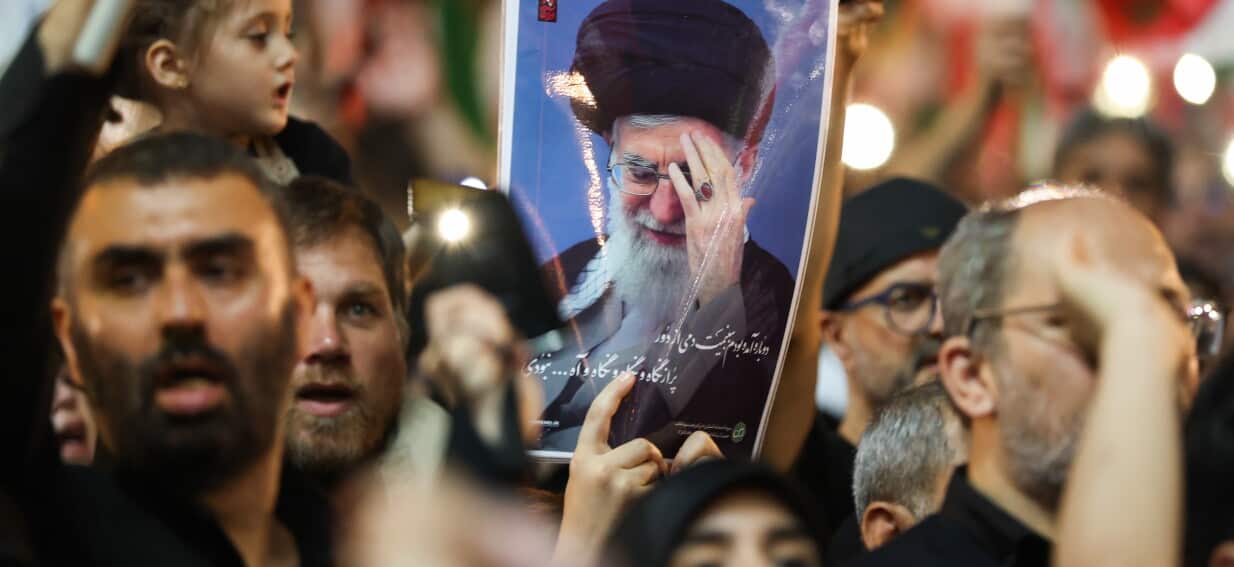
TEHRAN, Iran – A nation draped in black began a week-long farewell to its spiritual and political bedrock yesterday, as millions of Iranians poured into the streets for the funeral rites of Supreme Leader Ayatollah Ali Khamenei. His sudden death, confirmed by SBS News Top Stories, has not only sparked profound grief but also instantly elevated him to the status of a martyr within the Islamic Republic.
From the bustling avenues of Tehran to the historic city of Qom, vast crowds, many weeping openly and beating their chests in traditional Shiite mourning, accompanied the procession of Khamenei's casket. The air was thick with chants of "Death to America" and "Death to Israel," underscoring the deep ideological currents that defined his three-decade rule and continue to shape Iran's geopolitical stance. State television broadcast continuous footage of the immense throngs, portraying a unified nation in sorrow and defiance.
Unprecedented Public Outpouring
The scale of public mourning for Ayatollah Khamenei has been immense, surpassing even that seen for the founder of the Islamic Republic, Ayatollah Ruhollah Khomeini, in 1989. For many Iranians, Khamenei was more than just a leader; he was a steadfast symbol of resistance against perceived Western hegemony and a guarantor of religious values. His passing leaves an irreplaceable void at the pinnacle of a complex political and religious system.
Observers note that the narrative of martyrdom, actively promoted by state media, is designed to solidify national unity and rally support for the regime in a period of potential instability. The Supreme Leader's assassination, precise details of which remain under tight wraps by Iranian authorities, has been framed as an attack by external enemies, further reinforcing a narrative of victimhood and resilience.
Geopolitical Tremors Felt Globally
The death of Ayatollah Khamenei sends ripples across the Middle East and beyond. As Iran's commander-in-chief, chief diplomat, and ultimate arbiter on all major state policy, his decisions profoundly impacted regional conflicts, nuclear negotiations, and global oil markets. Analysts are now grappling with the implications for the future direction of Iranian foreign policy and its relationships with global powers.
Oil prices saw an immediate spike on international markets, with some commodities traders predicting sustained volatility. Australian consumers could face higher fuel costs in the coming weeks, potentially adding several cents per litre to petrol prices, impacting household budgets already strained by inflation. The Australian dollar also experienced minor fluctuations against major currencies as risk aversion increased in global financial markets.
Succession and the Path Forward
Attention now swiftly turns to the succession. The Assembly of Experts, an 88-member body of clerics, is constitutionally tasked with selecting the next Supreme Leader. While the process is usually lengthy and deliberative, the extraordinary circumstances surrounding Khamenei's death may expedite proceedings. Speculation is rife regarding potential candidates, with several prominent figures within the clerical establishment being considered.
The challenge for the next Supreme Leader will be immense: maintaining national cohesion, navigating complex international relations, and addressing the domestic economic grievances that have fuelled periodic protests in recent years. The legacy of Ayatollah Ali Khamenei, a figure whose life intertwined with the very fabric of modern Iran, will undoubtedly cast a long shadow over his successor and the future trajectory of the Islamic Republic.