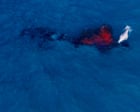
A momentous occasion, observed just off Australia’s eastern seaboard, has provided an unprecedented glimpse into the secret world of humpback whales. A drone pilot, working to monitor the annual migration, has captured what is understood to be only the fourth complete humpback whale birth ever recorded on film anywhere in the world – and the very first documented from the unique vantage point of a drone.
The astonishing footage, obtained by Alexander Forrest while conducting aerial observations for the Organisation for the Rescue and Research of Cetaceans in Australia (Orrca), showcases the raw beauty and vulnerability of a newborn calf's first moments. The dramatic event unfolded in calm sea conditions off the New South Wales north coast, offering a rare window into the beginning of life for these magnificent marine mammals.
An Unfolding Spectacle
Forrest, an experienced drone operator, was engaged in routine monitoring of migrating humpback whales when the incredible scene began to unfold. His camera was rolling as an adult female humpback engaged in the arduous, yet miraculous, act of giving birth. The footage meticulously documents the newborn calf's emergence, its first tentative swimming motions, and the crucial, life-sustaining moment it took its inaugural breath at the surface.
The emotional reunion between mother and calf, observed through the lens of a drone, provides invaluable scientific data and an awe-inspiring narrative. While The Guardian Australia reported on this significant event, the intimate details of this birth remain a privilege for those who witnessed it, even if through a technological intermediary. This footage is expected to contribute substantially to our understanding of early humpback development.
The Significance of a First Breath
For terrestrial animals, the first breath is often a given, but for marine mammals, especially those of such immense size, it is a perilous and coordinated effort that marks the true beginning of independent life. The drone’s ability to capture this critical juncture, unassumingly from above, offers scientists unparalleled insights into the immediate post-natal behaviour of both mother and calf. Researchers will be keenly analysing the interactions, the mother's protective instincts, and the calf’s initial attempts at buoyancy and swimming.
Orrca, the organisation for which Forrest was operating, plays a vital role in the protection and study of whales, dolphins, and seals along Australia's coast. Their work, often relying on observations such as these, helps inform conservation strategies and public awareness campaigns. This world-first drone footage will undoubtedly become a cornerstone in educational materials, highlighting the delicate balance of marine ecosystems.
Unlocking Oceanic Mysteries
The annual humpback migration along Australia's east coast is a spectacle in itself, with thousands of whales travelling from their Antarctic feeding grounds to warmer northern waters to calve. However, the exact moment of birth has remained largely elusive, shrouded by the vastness of the ocean. Previous documented births have often been serendipitous encounters, making this planned observation by drone particularly groundbreaking. The ability to witness such a profound event without disturbing the animals underscores the ethical application of drone technology in wildlife research.
This footage is more than just a captivating video; it's a scientific treasure. It offers direct evidence of birthing behaviour, which has largely been inferred or pieced together from fragmented observations. As more information is gleaned from this extraordinary recording, it promises to deepen our appreciation for these magnificent creatures and the complex lives they lead beneath the waves, ensuring their continued protection for generations to come.