The vibrant spectacle of Indian Prime Minister Narendra Modi addressing a cheering crowd in Sydney earlier this year, alongside Prime Minister Anthony Albanese, painted a picture of harmonious Indo-Australian relations and Indian domestic contentment. Yet, as critical Australian media outlets have highlighted, this carefully curated image may be a significant departure from the intricate and often volatile political landscape unfolding back on the subcontinent.
The Sydney Celebration and its Aftermath
Prime Minister Modi's visit to Australia was marked by a high-energy diaspora event in Sydney, where thousands of supporters congregated, eager to witness their leader on Australian soil. The joint appearance with Mr. Albanese underscored a burgeoning strategic and economic partnership between the two nations, seemingly solidifying a bond built on shared democratic values and mutual interests in a changing Indo-Pacific. The optics were impeccable: two leaders, a united front, and a seemingly contented Indian populace, as represented by the enthusiastic crowd.
However, the Australian independent news outlet Crikey swiftly provided a stark counterpoint to this narrative. Just days after the Sydney fanfare, India itself was experiencing a different kind of public assembly – widespread protests against the demolition of homes and livelihoods, primarily impacting the nation's most vulnerable. Crikey reported on how these events exposed a chasm between the projected image of a stable, unified India and the lived experiences of millions facing what critics describe as state-sanctioned displacement and marginalisation.
Unpacking the 'Cockroaches' Allegation
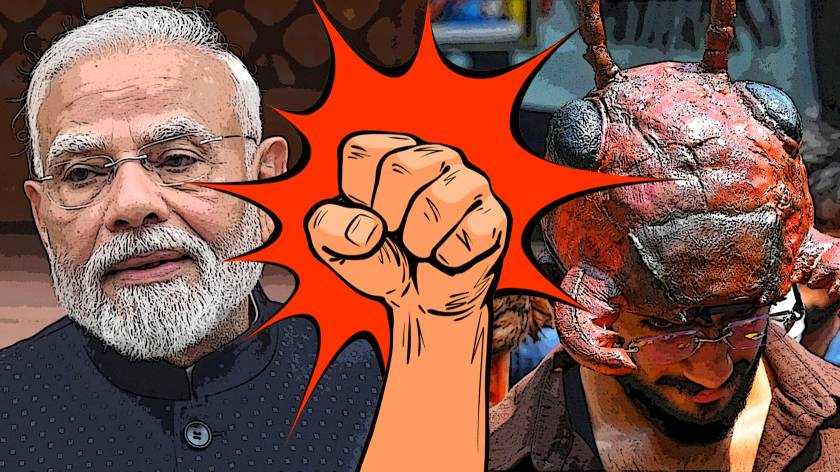
The most confronting aspect of Crikey's reporting revolved around inflammatory rhetoric used by some Indian officials. In a series of disturbing developments, certain political figures in India reportedly used dehumanising language, referring to sections of the population as 'cockroaches' – a chilling echo of historical genocidal language. This rhetoric was allegedly directed at communities whose homes were being razed, often with minimal notice or compensation, under the guise of urban development or encroachment removal. The juxtaposition of such language with the celebratory atmosphere of Modi's Australian visit serves as a powerful illustration of the disconnect between international perceptions and internal realities.
Dollars and Diplomacy: An Australian Perspective
For Australia, fostering strong ties with India is a strategic imperative. India's burgeoning economy, its significant population, and its geopolitical importance in the Indo-Pacific make it a crucial partner. The Albanese government has actively pursued closer engagement, including discussions around trade deals, defence cooperation, and people-to-people links. The high-profile welcome extended to Prime Minister Modi was undoubtedly part of this broader diplomatic push. However, Crikey's analysis implicitly raises questions about the extent to which Australian diplomatic efforts are engaging with the full spectrum of India's political and social realities, or if they are inadvertently bolstering a carefully constructed international image that masks domestic complexities and human rights concerns. The economic opportunities, while significant – potentially worth billions of Australian dollars in trade and investment – cannot entirely overshadow ethical considerations.
The Illusion of Unity
The 'illusion of Indian political contentment,' as Crikey framed it, is a powerful tool in international relations. When projected abroad, it simplifies a multifaceted nation into a manageable, agreeable entity for diplomatic and economic engagement. However, the events following Modi's Australian tour – the demolitions and the dehumanising rhetoric – puncture this illusion. They highlight a nation grappling with significant internal divisions, socio-economic inequalities, and challenges to democratic norms, which in turn offers a more nuanced, albeit less comfortable, understanding of India for Australian observers and policymakers.