
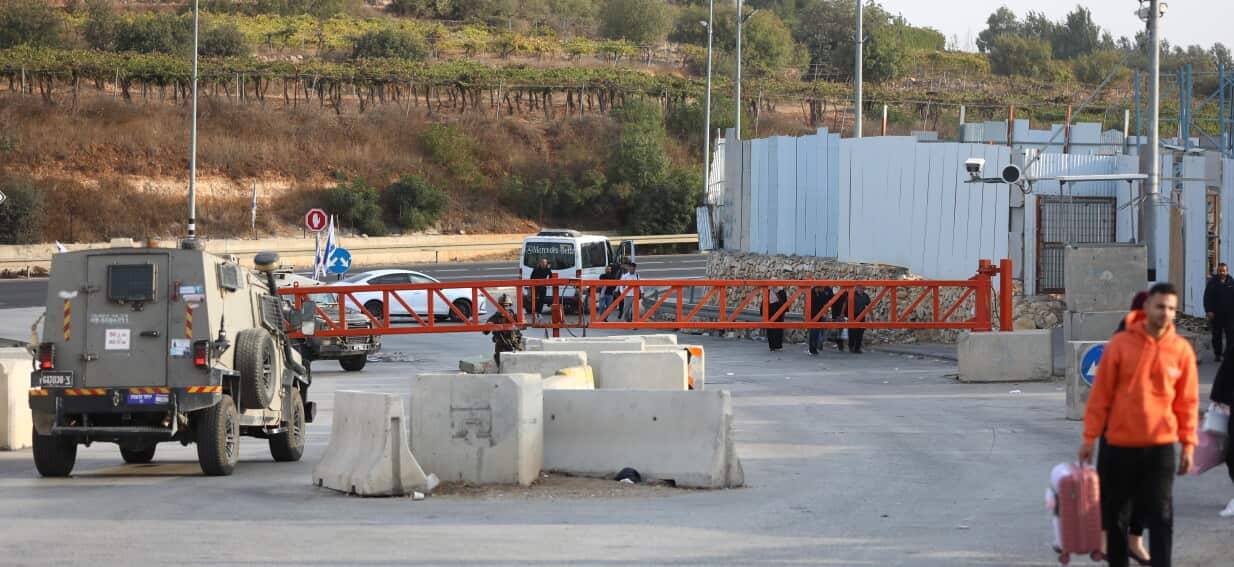
More than 1,200 Palestinians have been displaced across the occupied West Bank following an intensive Israeli military sweep launched in response to the deaths of several Israeli soldiers.
The offensive represents one of the sharpest escalations in the territory in recent months, exacerbating an already acute humanitarian situation. SBS News Top Stories reported that the operations were initiated after Israeli personnel were killed in local clashes, prompting a heavy and sustained deployment of armed forces into densely populated residential quarters and refugee camps.
Military sweeps trigger mass displacement
Local authorities and relief organisations reported widespread disruption as armoured columns, supported by surveillance assets, cordoned off major thoroughfares, searched homes, and dismantled physical infrastructure. SBS News Top Stories reported that at least 1,200 residents were compelled to flee their homes as operations intensified, with temporary shelters quickly overwhelmed by the influx of displaced families.
The displacement has severed access to essential public utilities, education facilities, and emergency medical services in affected districts. Humanitarian monitors on the ground noted that the rapid forced evacuation left hundreds of families without basic amenities or alternative accommodation, compounding the pressures facing local civil networks.
Palestinian Authority denounces collective punishment
The Palestinian Authority issued a swift condemnation of the sweeping military manoeuvres, formally categorising the campaign as a measure of "collective punishment" enacted against entire communities. In official statements, Palestinian representatives maintained that the extensive operations far exceeded proportionate security action, systematically disrupting civilian livelihoods and causing arbitrary destruction.
International humanitarian law strictly prohibits collective punishment, stipulating that individuals cannot be penalised for acts they did not commit. Palestinian officials warned that targeting civilian infrastructure and restricting freedom of movement would only entrench hostility and dismantle remaining avenues for administrative stability.
Expanding instability beyond the Gaza frontline
The West Bank has experienced rising casualties and intensified friction since the regional conflict flared in late 2023. While international attention has frequently remained focused on operations within the Gaza Strip, violence throughout the West Bank has reached levels unseen in decades, driven by daily military incursions, armed resistance, and settler violence.
Security analysts note that the death of Israeli soldiers has heightened domestic pressure on the Israeli government to maintain a rigorous operational posture across the occupied territories. However, such responses risk fuelling prolonged unrest and entrenching low-intensity conflict across northern sectors of the West Bank.
Growing international concern over humanitarian cost
The expanding scale of displacement has renewed diplomatic concern among Western partners, including Australia, which has repeatedly urged restraint and adherence to international humanitarian conventions. Diplomatic envoys have cautioned that mass population displacement and unchecked civilian disruption undermine any prospects for a durable two-state framework.
With military operations continuing, relief agencies have appealed for unrestricted access to deliver emergency aid to displaced households, warning that protracted dislocation could destabilise neighbouring districts already under acute economic strain.


