
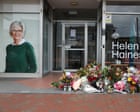
Federal security agencies have launched an urgent review into the safety of politicians after independent MP Helen Haines was grievously injured in an alleged attack that has shaken Canberra.
Dr Haines, who represents the regional Victorian electorate of Indi, remains in a stable condition in hospital after losing both of her legs, her husband confirmed. The catastrophic incident has sent shockwaves through the political spectrum, abruptly bringing latent apprehensions regarding the vulnerability of elected representatives and their staff to the forefront of national affairs.
Heightened peril for public figures
The nature of the alleged assault has intensified discussions within Parliament House about the volatile environment confronting public figures. Representatives from across the political spectrum have reported an escalating cadence of vitriol, targeted harassment, and explicit physical threats encountered while conducting routine constituency business.
Security specialists note that the Australian tradition of accessible representative democracy—where politicians routinely interact with the public in unfortified community settings—is now under sustained pressure from fringe hostility and online radicalisation spilling into real-world violence. Frontline community engagements, once viewed as standard civic obligations, are increasingly fraught with apprehension for parliamentarians and their electorate staff.
Costly upgrades to private residences
Faced with a deteriorating threat environment, numerous parliamentarians have already taken matters into their own hands. The Guardian Australia reported that federal MPs have been shelling out thousands of dollars of their own funds to improve personal security measures at their properties.
These self-funded upgrades have included the installation of sophisticated closed-circuit television systems, reinforced doors, and advanced perimeter alarms at private residences and commercial electorate offices. Multiple MPs have noted that current parliamentary allowances and standard provisions do not sufficiently cover the surging costs required to deter determined aggressors.
The reliance on personal expenditure has exposed sharp inequities in protective coverage, particularly between senior cabinet ministers—who receive dedicated Australian Federal Police details—and regional crossbenchers or backbenchers whose offices often maintain minimal physical barriers against potential intruders.
Widespread appraisal of official protocols
In response to the alleged attack and growing parliamentary unease, Commonwealth intelligence and law enforcement agencies have initiated an urgent, comprehensive reassessment of safety protocols. The review will systematically evaluate vulnerabilities across electorate premises and private homes nationwide.
Officials are expected to reconsider the baseline security infrastructure afforded to all members of parliament. Options under consideration include heightened physical barriers, upgraded duress monitoring, and more dynamic intelligence sharing between federal and state police jurisdictions. However, authorities face the delicate challenge of reinforcing physical safety without insulating elected officials entirely from the communities they represent.
As Dr Haines remains under specialist medical care, colleagues across the parliamentary divide have expressed deep distress over the tragedy. Senior figures acknowledge that the incident marks a grim watershed for Australian political life, one that is likely to permanently reshape how representatives live, work, and engage with the public.


