
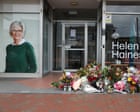
Federal intelligence and police agencies have initiated an urgent review into politician safety after federal members revealed they are spending thousands of dollars out of pocket to protect themselves against escalating threats.
The Guardian Australia reported that multiple federal parliamentarians raised grave concerns regarding the safety of their homes and constituency offices during briefings conducted by the Australian Federal Police (AFP) and the Australian Security Intelligence Organisation (ASIO). The warnings follow the catastrophic incident earlier this week in which independent MP Helen Haines suffered critical injuries, resulting in the amputation of both her legs.
Security chiefs have agreed to examine existing arrangements for federal representatives, who have increasingly become the targets of coordinated harassment, stalking, and violent rhetoric in their electorates.
Urgent briefings reveal deepening anxiety
Lawmakers privately disclosed to authorities that existing Commonwealth entitlements remain inadequate to deal with the contemporary threat environment, forcing some to spend substantial personal funds on private alarm systems, surveillance cameras, and perimeter fencing. While the Department of Finance oversees standard security measures for electorate offices, MPs have repeatedly argued that bureaucratic approvals are cumbersome and slow to adapt to fast-moving threats.
Briefings conducted in the wake of the Haines tragedy revealed widespread unease across party lines, particularly among female parliamentarians and high-profile independents who frequently face vitriolic online campaigns that spill over into physical intimidation.
Intelligence officials have continually warned in recent threat assessments that the domestic security environment has grown more volatile, driven by ideological extremism, personal grievances, and toxic online ecosystems that single out public figures.
Calls mount for dedicated parliamentary safety body
As politicians prepare to return to Canberra next week for the parliamentary sitting, the Labor government and the Coalition are weighing a series of measures to address the burgeoning crisis. Among the proposals under consideration is the establishment of a dedicated parliamentary committee on MP security, designed to ensure continuous risk assessments and streamlined safety upgrades.
Lawmakers are also pushing for bolstered funding and operational resources for the AFP’s close protection units and regional commands, which monitor threats against elected officials.
Condolence and support motions acknowledging the horrific attack on Dr Haines are expected to dominate the opening of proceedings next week, offering a rare moment of cross-party solidarity in a deeply shaken parliament.
Crossbench demands for decorum face major-party resistance
However, broader attempts to overhaul the political culture that many argue fuels hostility outside Parliament House appear destined to stall. Crossbench MPs have renewed appeals for an overhaul of Question Time, urging party leaders to dial down adversarial posturing and aggressive rhetoric that can legitimise extremism in the community.
Despite these appeals, senior figures within the major parties remain cool on structural alterations to parliamentary debate. Both Labor and the Coalition are understood to view Question Time as an essential forum for democratic scrutiny, making substantial changes to its format unlikely.
Instead, the national response will remain squarely focused on physical protection, enhanced surveillance, and tighter intelligence-sharing as the political apparatus confronts an unprecedented security reckoning.


