
Nathan Fielder’s secretive three-hour Elizabeth Holmes documentary, You Can See Everything, has emerged as a box-office phenomenon and an unlikely Oscar contender after lifting the veil on Silicon Valley’s most notorious fabulist.
The A24 production, co-directed by Fielder alongside documentarian Lance Oppenheim, has quickly transformed from an intensely guarded industry secret into a sold-out cinematic sensation, captivating audiences with an intimate post-mortem of corporate deceit and personal delusion.
A Psychological Beachside Duel
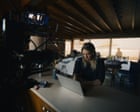
The film’s opening half chronicles several surreal weeks in 2023 when Fielder and Oppenheim embedded with Holmes, her husband Billy Evans, and their two infant children at a secluded beachfront rental. The shoot took place during the tense final countdown before Holmes began serving her federal prison sentence for multi-million-dollar wire fraud.
As Guardian Australia Culture reported, the film frames this domestic interlude as a high-stakes psychological chess game. Fielder, an absurdist auteur known for deadpan comic deconstructions of social dynamics, attempts to puncture the indomitable facade maintained by the former biotechnology darling. Surrounded by the domestic banality of parenthood and her poorly dissembling partner, Holmes remains an enigma that defies conventional documentary interrogation.
The Anatomy of an Unbending Denial
Central to the film is an unblinking confrontation between two figures famous for ignoring social norms. In tight, saturated close-ups, Fielder deadpans Holmes directly, asking the defining question that echoes throughout the runtime: “Are you being real right now?”
According to Guardian Australia Culture, the exchange encapsulates the documentary’s dizzying spiral into reality distortion. Despite the catastrophic collapse of Theranos and her imminent incarceration, Holmes maintains complete, serene conviction in her innocence. She insists with apparent sincerity that she has never uttered an untruth in her life, while stubbornly repeating the discredited claim that her proprietary blood-testing devices could perform up to 1,000 diagnostic tests.
The sequence mirrors the pull of an online rabbit hole, showing that the closer the lens moves towards its subject without external tethering, the further objective sense devolves. Fielder’s trademark deadpan tension gives way to something far more unnerving: a raw, claustrophobic portrait of total self-mythologising.
From Total Secrecy to Oscar Contention
Shrouded in non-disclosure agreements and strict spoiler embargoes since its quiet announcement in September, You Can See Everything has achieved rare commercial momentum for an independent non-fiction release. Sold-out sessions across theatrical markets have been propelled by feverish word-of-mouth regarding the film's structural surprises, including a purported shock A-list cameo that radically reshapes its later acts.
Industry observers now consider the colossal three-hour study a frontrunner for major accolades, with distributors eyeing a historic run in the upcoming Academy Awards race. For cinemagoers and cultural commentators alike, the documentary stands as a monument to an era defined by grand illusions, proving that even stripped of her signature black turtlenecks and boardroom stages, Elizabeth Holmes remains modern capitalism’s most baffling puzzle.