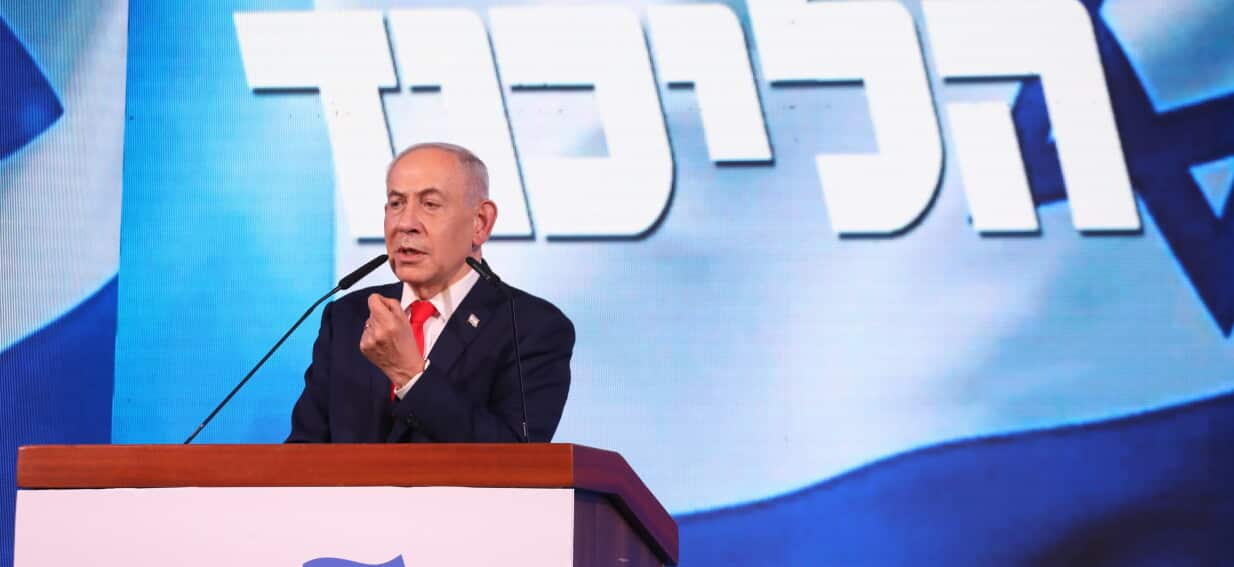
Israeli Prime Minister Benjamin Netanyahu faces a protracted parliamentary deadlock after near-final election results left both his conservative bloc and rivals short of a governing majority without the backing of Arab parties.
With 99 per cent of ballots counted following the national poll, Israel’s political landscape remains paralysed by an intractable arithmetic impasse. While the right-wing bloc aligned with Mr Netanyahu maintains a narrow numerical advantage over its rivals, it remains stranded tantalisingly short of the crucial 61-seat threshold required to command the 120-member Knesset.
Neither the incumbent prime minister nor the loose alliance of centrist, leftist and right-wing parties seeking to oust him can muster the numbers to establish a stable executive on their own.
Fraud claims ignite fresh controversy
The veteran leader moved swiftly to cast doubt over the counting process as the final figures solidified, alleging that political opponents had benefited from irregularities at polling stations. SBS News Top Stories reported that Mr Netanyahu claimed Arab political parties had gained ground through voter fraud, escalating friction across an already deeply polarised domestic sphere.
Central election authorities and independent monitors have consistently defended the integrity of the count, maintaining that the ballot adhered strictly to standard statutory procedures. Nonetheless, the prime minister’s public allegations have heightened concerns among legal experts and political analysts over the deliberate delegitimisation of democratic processes in an atmosphere defined by deep institutional fatigue.
Kingmaker dilemma in a fractured Knesset
The razor-edge tally leaves both Mr Netanyahu’s Likud-led coalition and his disparate opponents facing an acute strategic conundrum. Neither side can assemble a viable governing programme without actively courting or relying upon Arab factions, who have historically been sidelined from mainstream executive coalitions in Jerusalem.
Arab parties have traditionally declined to join formal governing alliances with Zionist factions, reflecting deep-seated ideological divides regarding domestic minority rights and the broader conflict in the Palestinian territories. However, the uncompromising mathematics of the current Knesset means that their parliamentary clout—whether exercised through explicit confidence-and-supply agreements or tactical abstentions during pivotal votes—represents the only feasible route out of the immediate impasse.
Prolonged paralysis tests institutional patience
The inconclusive outcome threatens to condemn the nation to another gruelling cycle of political trench warfare. Observers warn that if the fractured factions cannot reconcile their differences to form an administration, the country faces the grim prospect of yet another snap general election.
Israel has already endured a succession of rapid-fire national votes in recent years, a pattern driven by the legal disputes and divisive personal brand surrounding Mr Netanyahu’s prolonged tenure. With international observers watching closely, party emissaries have begun exploratory talks, though early indications suggest neither side is willing to concede ideological ground.
Unless an unprecedented accommodation is brokered between historic adversaries over the coming weeks, Israel appears destined to remain trapped in the very political limbo that voters had hoped to resolve.