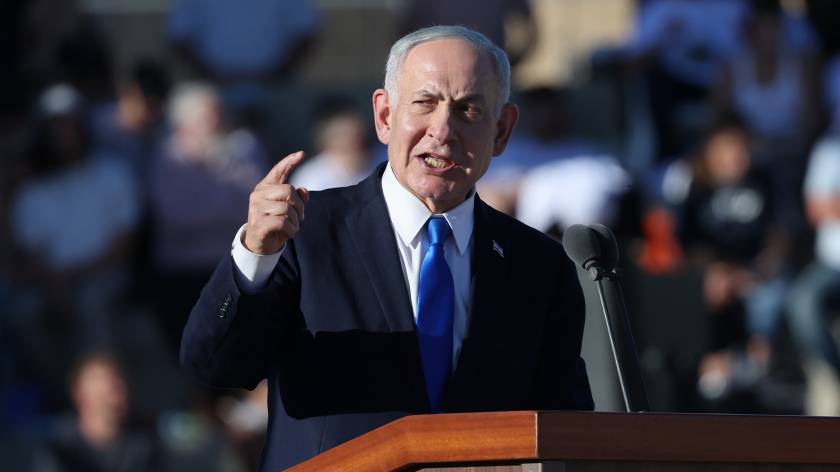
JERUSALEM (via Crikey) – After completing the first full parliamentary term since 1988 — a remarkable feat in itself for a nation accustomed to political volatility — Israel’s Knesset has dissolved, triggering a fresh round of elections. For many observers, the writing appears to be on the wall for Prime Minister Benjamin Netanyahu, who has dominated Israeli politics for much of the past two decades. However, as independent Australian news and analysis site Crikey recently reported, the reality on the ground is significantly more nuanced than simple poll numbers suggest.
The Illusion of a Clear Victory
Recent surveys paint a seemingly definitive picture: a majority of Israelis are weary of Netanyahu’s protracted leadership and the scandals that have often shadowed his administration. Crikey’s analysis highlighted that while opposition blocs might secure enough seats to form a government, the path to unseating ‘Bibi’ is fraught with historical precedents of unexpected comebacks and eleventh-hour political manoeuvres. Israeli elections are less about a single party achieving outright dominance and more about the intricate art of coalition building, where even a small faction can wield disproportionate power.
Coalition Conundrums and Kingmakers
The Israeli political system, a multi-party parliamentary democracy, rarely produces a clear majority for any single party. Instead, governments are formed through complex alliances between numerous, often ideologically disparate, groups. This is where Netanyahu, a seasoned political operator, has consistently showcased his unparalleled ability to forge and maintain coalitions, even with unlikely bedfellows. The challenge for any opposition bloc is not just winning more votes than the Likud party, but uniting diverse factions – from ultra-religious parties to secular left-wing groups – under a common banner, a task that has historically proven almost insurmountable for his challengers. Crikey pointed out that the fragmentation within the anti-Netanyahu camp could easily squander any polling advantage.
The Enduring Appeal of 'Mr. Security'
Despite facing multiple corruption charges and widespread dissent, Netanyahu continues to command a significant loyal base. His supporters often view him as ‘Mr. Security’, a strong hand indispensable for navigating the volatile Middle East. This perception, cultivated over years, often trumps domestic policy concerns or legal woes, particularly when regional tensions flare. Any perceived threat, external or internal, can rally his base and sway undecided voters towards stability, a card Netanyahu has played repeatedly and effectively throughout his career. His campaign machinery is also notoriously well-funded and highly disciplined, capable of launching extensive, targeted advertising campaigns that resonate with his core demographic.
What's at Stake for Israel and Beyond
Beyond domestic policy, the upcoming election carries significant implications for regional geopolitics and Australia’s diplomatic ties. A change in leadership could usher in shifts in Israel’s approach to the Palestinian conflict, relations with Iran, and its alliances with Western powers, including Canberra. Australian foreign policy observers will be watching closely, as the outcomes could influence everything from trade agreements to collaborative efforts on security and technology. The stakes are undoubtedly high, affirming Crikey's assertion that this election is anything but straightforward, promising a political spectacle that will captivate both local and international audiences until the last ballot is counted and the final coalition deal is brokered.