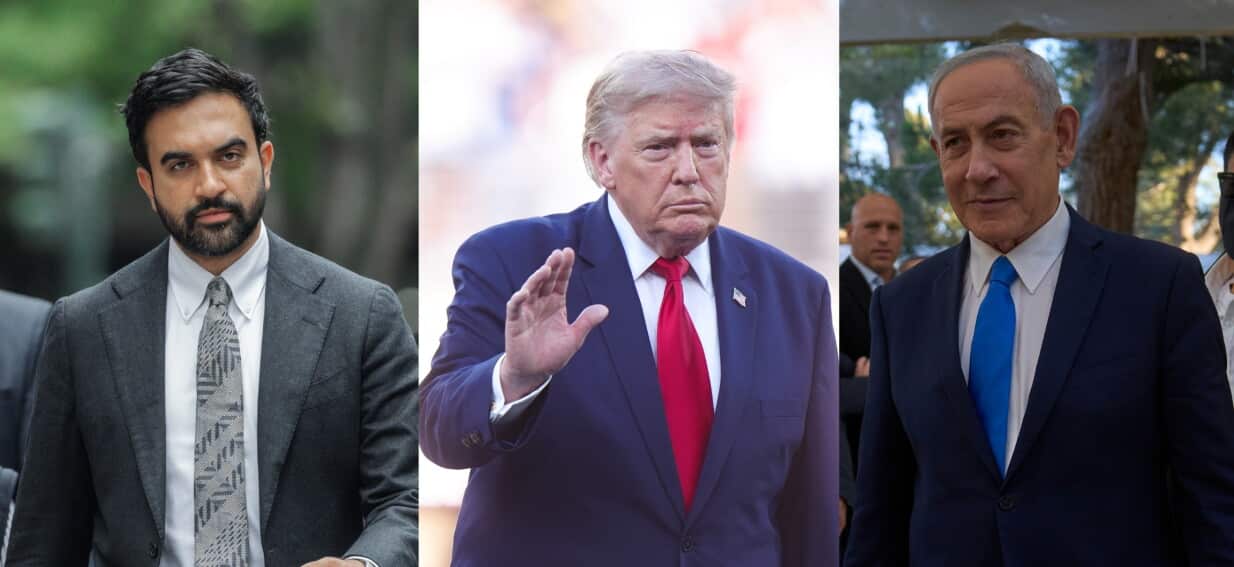
Israeli Prime Minister Benjamin Netanyahu could soon arrive in New York, a visit fraught with geopolitical tension as an international arrest warrant for alleged war crimes hangs over his head. The Israeli government has vehemently dismissed the warrant from the International Criminal Court (ICC) as "bogus," setting the stage for a dramatic diplomatic episode should Netanyahu proceed with the trip.
The potential visit, first reported by SBS News Top Stories, has not been officially confirmed by Jerusalem, but the speculation alone has ignited a firestorm of discussion across international legal and political circles. At the heart of the controversy is the ICC's decision to issue an arrest warrant for Netanyahu and his Defence Minister Yoav Gallant, alongside Hamas leaders Yahya Sinwar, Mohammed Deif, and Ismail Haniyeh, for alleged war crimes and crimes against humanity in connection with the conflict in Gaza.
Diplomacy in the Face of Disrepute
For a head of state facing such severe allegations, a visit to a major global hub like New York presents a complex diplomatic tightrope walk. While the United States is not a signatory to the Rome Statute, which established the ICC, and therefore not legally bound to execute such a warrant, the political optics would be undeniable. Any engagement in New York would be scrutinised through the lens of these international accusations, potentially undermining Israel's efforts to garner international support for its ongoing military operations.
Netanyahu's government has consistently argued that the ICC has no jurisdiction over Israel, pointing to Israel's robust and independent judicial system capable of investigating and prosecuting alleged wrongdoings. This position aligns with Australia's long-standing policy of not recognising the ICC's jurisdiction over Israeli nationals, a stance reiterated by Foreign Minister Penny Wong earlier this year. However, global legal experts remain divided on the applicability and enforceability of the warrant, particularly in non-signatory states.
A Transatlantic Divide in Opinion
The prospective visit has also highlighted significant divisions within US political commentary. Veteran political commentator and academic Norman Finkelstein, known for his critical views on Israeli policy, has suggested Netanyahu's freedom during a hypothetical New York visit would be highly contentious, perhaps even signalling a "come-uppance" after years of avoiding accountability. Finkelstein's comments reflect a growing sentiment among some progressive circles that figures accused of war crimes should face international justice, regardless of their political stature.
Conversely, former President Donald Trump, a staunch ally of Netanyahu, has indicated an expectation that the Israeli leader would be afforded the full courtesies typically extended to a head of state. Trump's perspective underscores a belief within a segment of American conservatism that the ICC is an illegitimate body often unfairly targeting US and allied leaders. This schism illustrates the deeply polarised opinions surrounding the Israel-Gaza conflict and the role of international law.
The Australian Perspective: Implications Down Under
For Australian citizens, the developments have a direct bearing on foreign policy and domestic debates. Australia, like the US, has not ratified the Rome Statute in its entirety, meaning it is not obligated to execute ICC warrants. However, the Albanese government has consistently urged adherence to international law and humanitarian principles in the Middle East. The controversy surrounding Netanyahu's potential visit therefore places further scrutiny on Australia's carefully balanced diplomatic position. The situation could also impact the significant Australian Jewish and Palestinian communities, who hold strong and often divergent views on the conflict and its key players.
As the international community watches on, the question of Netanyahu's New York visit remains speculative but profoundly significant. It represents a potential collision of international legal principles, diplomatic expediency, and deeply held political beliefs, with global ramifications that extend far beyond the immediate players involved. The cost, both politically and reputationally, for all parties could be substantial, measured not in AUD, but in the challenging currency of international legitimacy and moral authority.