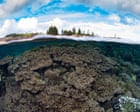
Norfolk Island's pristine and scientifically significant coral reefs, believed to harbor numerous undiscovered species, are facing an existential crisis. A damning convergence of coral disease, the intensifying El Niño climate pattern, and a contentious federal government-backed dredging operation in a nearby shipping channel threatens to decimate these unique marine ecosystems, The Guardian Australia has reported.
Conservationists and scientists are raising urgent alarms over the future of these ancient formations, which fringe the remote Australian territory, warning that a failure to act could lead to irreversible ecological damage.
Unseen Wonders Under Threat
Many of Norfolk Island's corals are thought to represent species yet to be formally documented by science, underscoring their unique evolutionary importance. Dr. Elizabeth McLeod, a leading coral reef researcher, expressed grave concerns, stating that the sheer biological distinctiveness of these reefs places them at high risk. "We're talking about a treasure trove of biodiversity, much of which we barely understand," Dr. McLeod commented during a recent marine science symposium. "To jeopardise them now, through a confluence of pressures, would be an unforgivable loss not just for Australia, but for global marine science."
The island's isolation has allowed for the evolution of distinct coral communities, making their preservation crucial for understanding broader Indo-Pacific biodiversity. The potential loss of these, as yet, unnamed species represents a blow to marine biology and conservation efforts worldwide.
A Perfect Storm of Pressures
The immediate threats are multifaceted. Widespread coral disease, exacerbated by poor water quality, is already taking a heavy toll. Sediment run-off and pollution, stemming from unmanaged cattle farming, extensive land clearing, and inadequate wastewater treatment, are continuously washing into the island's bays. This influx of nutrients and particulate matter is creating an ideal breeding ground for disease and fostering rampant algal blooms, which smother and kill corals.
Compounding these localised stressors is the looming spectre of El Niño. The cyclical climate phenomenon typically brings warmer sea temperatures, increasing the likelihood of coral bleaching events. Scientists fear that corals already weakened by disease and pollution will have little resilience against prolonged thermal stress, pushing them closer to a tipping point.
Dredging Sparks Fresh Outrage
The most recent and arguably most contentious threat comes from a federal government-approved plan to dredge a shipping channel adjacent to these fragile reefs. Details of the dredging operation remain scarce, but environmental groups are decrying the project, fearing that it will stir up vast quantities of sediment, disrupt marine currents, and potentially release dormant pollutants, further suffocating and damaging the already stressed coral communities. Local residents, many of whom rely on the island's marine environment for tourism and sustenance, have expressed frustration at what they perceive as a lack of transparent consultation and inadequate environmental impact assessments.
"The idea of dredging near these reefs right now, given everything else they're facing, is simply baffling," stated a spokesperson for the Norfolk Island Environmental Society. "We need an immediate moratorium on any such activities and a comprehensive, independent review of the potential impacts, alongside urgent action to manage existing land-based pollution sources. The future of Norfolk Island's natural heritage depends on it, and frankly, the Federal Government has a responsibility to protect it."
As the triple threat looms, the international scientific community watches with bated breath, hoping that Australia will intervene to safeguard these unique and irreplaceable marine marvels before it is too late.