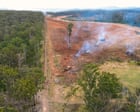
Sydney, NSW — New South Wales is failing dramatically in its commitment to curb rampant land clearing, with new government data revealing an alarming rate of habitat destruction across the state. Despite repeated assurances, nearly 90 football fields' worth of woody vegetation were bulldozed daily in 2024.
The Guardian Australia reported on the grim figures, which show that the overall clearing of vegetation statewide surged by a substantial 16% in 2024, reaching a devastating total of 81,293 hectares. To put this into perspective, this cleared area is more than 275 times the size of the Sydney central business district – a stark and troubling indicator of environmental degradation.
Non-Woody Vegetation Clearing Skyrockets
While the clearing of trees and shrubs remains a significant concern, the data highlights an even more dramatic trend: a sharp 70% increase in the clearing of non-woody vegetation compared to the previous year. This category includes grasslands, heathlands, and other vital ecological communities that, while not always as visually prominent as forests, play crucial roles in biodiversity, soil health, and carbon sequestration.
Environmental groups have long warned that the cumulative impact of clearing these diverse vegetation types is devastating for native wildlife and ecosystem resilience. The relentless destruction not only removes critical habitat for countless species but also contributes to soil erosion, waterway degradation, and an increased risk of bushfires.
Unfulfilled Promises and Ecological Costs
For years, successive NSW governments have articulated commitments to reverse the trend of accelerating land clearing. However, the latest figures firmly demonstrate that these pledges are not translating into effective on-the-ground action. The continued high rate of clearing underscores a significant policy failure and raises serious questions about the efficacy of existing environmental protection laws and their enforcement.
Conservationists argue that weak regulations, coupled with a lack of adequate resourcing for monitoring and compliance, are empowering landholders to continue clearing at unsustainable rates. The ecological cost of this destruction is immeasurable, impacting koala populations, migratory bird pathways, and the overall health of the state's natural heritage. The loss of complex woody habitats, in particular, represents a permanent alteration of the landscape and a severe blow to biodiversity.
Call for Stronger Environmental Safeguards
The alarming statistics have prompted renewed calls from environmental organisations for urgent and decisive action. They demand stronger legislative safeguards, increased funding for environmental protection agencies, and a more robust approach to investigating and prosecuting illegal land clearing.
Critics contend that the current system is not providing sufficient deterrence and that existing loopholes are being exploited. There is a growing consensus that without a fundamental shift in policy and enforcement, New South Wales risks irreversible environmental damage, jeopardising its unique natural assets for future generations. The onus is now firmly on the government to demonstrate how it plans to genuinely rein in this destructive trend and honour its environmental commitments.