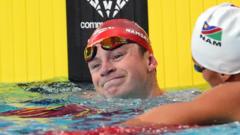
GLASGOW – One of the world’s most dominant swimmers, Adam Ramsay-Peaty, is grappling with an unexpected and deeply frustrating run of results at the Commonwealth Games in Glasgow, telling reporters that “nothing makes sense” after he secured yet another bronze medal.
The 27-year-old British breaststroke king, widely considered unbeatable in his premier events, has been left scratching his head and questioning his form after failing to convert his customary world-beating speed into Commonwealth gold. His candid admission signals a rare moment of vulnerability from an athlete accustomed to standing on the top step of the podium, a stark contrast to his usual swagger and assuredness. The pressure on Peaty to deliver gold for his nation has been palpable, with the BBC Sport reporting extensively on his every race.
A Familiar Frustration for the Breaststroke King
Peaty’s latest bronze comes after a series of races where he has been uncharacteristically out-touched by rivals, a scenario almost unheard of in recent years. His dominance in breaststroke events is such that he holds virtually all major world records and Olympic titles, making his current struggles in Glasgow all the more perplexing for pundits and fans alike. The Commonwealth Games, often seen as a stepping stone or a chance to fine-tune before larger international competitions, has instead become a crucible of unexpected challenges for the British star.
His emotional declaration—“nothing makes sense”—underscores the mental toll these results are taking. For an athlete meticulous in preparation and execution, the inability to translate training into race-day triumph can be profoundly disorienting. While a bronze medal would be a career highlight for many swimmers, for Peaty, it represents a significant underperformance against his own lofty standards and expectations.
The Weight of Expectation and the Road Ahead
Returning to peak form isn't just about physical conditioning; it involves a complex interplay of mental resilience and tactical adjustments. The spotlight on Peaty is intense, and every stroke is scrutinised by a global audience. His struggles in Glasgow will undoubtedly prompt a period of deep reflection and analysis with his coaching team. While the immediate disappointment is evident, elite athletes often use such setbacks as fuel for future success, dissecting performances to identify areas for improvement before the next major championships.
For Australian swimmers, Peaty’s unexpected vulnerability offers a rare psychological advantage. While they still respect his formidable talent, his current form suggests that the seemingly invincible has a chink in his armour, potentially inspiring greater confidence among contenders from nations like Australia who have typically battled for minor medals in Peaty's specialist events.
Bronze, But Not Broken
Despite the clear frustration, Peaty is not known for allowing setbacks to define him. His career has been marked by an relentless pursuit of excellence and an unwavering competitive spirit. While the Commonwealth Games in Glasgow may not be yielding the golden bounty he anticipated, his candid reflections reveal an athlete deeply invested in understanding and overcoming challenges. The swimming world will be watching closely to see how the breaststroke phenomenon responds to this period of introspection and what lessons he draws from these unexpected bronzes, as he undoubtedly targets a return to his peerless best on the global stage.