
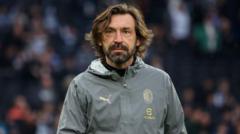
Rome: Andrea Pirlo, the revered maestro of Italian football, has reportedly been forced to withdraw from contention for the top job at the Italian Football Federation (FIGC), with allegations linking him to a Russian betting firm proving a bridge too far for the embattled organisation. The astonishing development deepens the malaise gripping Italian football, still reeling from its unprecedented third consecutive failure to qualify for the FIFA World Cup.
BBC World reported on Monday that Pirlo, a World Cup winner in 2006 and a celebrated figure in European football, was the front-runner to take a pivotal executive role within the FIGC, a position seen as crucial in rebuilding the national team's fortunes. However, an unexpected backlash erupted after details surfaced regarding his alleged connections to a Russian betting entity. While the exact nature of these links remains subject to speculation, the timing amidst ongoing geopolitical tensions and heightened scrutiny of sports integrity proved incendiary for the Italian public and media.
Azzurri's Bitter World Cup Hangover
The controversy surrounding Pirlo could not have come at a worse time for Italian football. The Azzurri, four-time World Cup champions, are enduring their darkest period in recent memory, having humiliatingly missed out on the global showpiece event in 2018, 2022, and now, 2026. This unprecedented trifecta of failures has sparked a nationwide inquest, putting immense pressure on the FIGC to implement drastic reforms and bring in new leadership.
Sources close to the FIGC, speaking anonymously to Italian media outlets, indicated that while Pirlo was considered a strong candidate due to his playing pedigree and nascent coaching career, the betting firm entanglement created an insurmountable public relations hurdle. The Federation, already facing intense criticism for its perceived mismanagement and lack of foresight, was reportedly unwilling to risk further alienating a frustrated fanbase with a controversial appointment.
Integrity Under the Spotlight
The integrity of sports, particularly in relation to betting, has been a significant talking point in global football. Australian sports codes, for instance, have strict guidelines regarding 선수 (player or participant) involvement with gambling entities. For the FIGC, already battling a perception of systemic issues, allowing a prominent figure with such alleged ties into a high-level executive role was deemed too risky. The financial implications for the FIGC, estimated to be in the tens of millions of euros following the World Cup absences, mean that public trust and sponsorship appeal are paramount.
Leadership Vacuum Deepens
Pirlo's rumoured withdrawal leaves the FIGC in an even more precarious position regarding its leadership structure. The Federation has been actively seeking to revitalise its image and strategy, with numerous reports suggesting internal divisions and a struggle to find consensus on the path forward. The executive role Pirlo was slated for is considered vital in shaping the future development of Italian football, from grassroots programs to the national team's tactical philosophy.
The search for a figurehead who can unite a fractured footballing nation continues, complicated now by the recent scandal. The episode serves as a stark reminder that even figures with legendary status are not immune from the intense scrutiny that accompanies high-profile roles, particularly when controversies involving commercial interests intersect with the pursuit of sporting excellence. The road ahead for Italian football appears increasingly rocky, with public confidence at an all-time low and a clear leadership void yet to be effectively addressed.