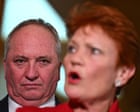
Prime Minister Anthony Albanese has thrown down the gauntlet to the Coalition, challenging them to adopt a resolute approach akin to former Prime Minister John Howard's handling of Pauline Hanson. The demand came as the government launched its official response to a comprehensive parliamentary inquiry into Islamophobia in Australia.
Speaking at the report's unveiling, attended by diverse community leaders and members, Mr Albanese directly addressed Opposition Leader Peter Dutton and Shadow Treasurer Angus Taylor, urging them to clearly articulate their position on One Nation. The Prime Minister's remarks signal a renewed emphasis on political parties actively distancing themselves from divisive rhetoric, particularly in the context of fostering a more inclusive society.
A Nod to Howard's Legacy
Mr Albanese explicitly invoked John Howard’s legacy, recalling the former Liberal Prime Minister's decisive actions in the late 1990s and early 2000s. At that time, Mr Howard famously condemned Pauline Hanson’s One Nation party, refusing to direct preferences to them and isolating the party from mainstream politics. This historical precedent is now being held up as a benchmark for contemporary political leadership, particularly as the Liberal Party navigates its own relationship with populist movements.
“John Howard understood the importance of drawing clear lines in the sand against intolerance,” Mr Albanese stated, without directly quoting him, but alluding to the underlying principle. “It is incumbent on all leaders to reject prejudice in all its forms, and that includes when it emanates from parties like One Nation.” The Prime Minister’s comments, originally reported by SBS News Top Stories, underscored a broader appeal for bipartisanship in confronting social division.
The Islamophobia Report: A Call to Action
The launch of the government’s response to the ‘Inquiry into the rise of Islamophobia in Australia’ marks a significant step towards addressing systemic discrimination faced by Muslim Australians. The report, which involved extensive consultations and submissions from across the nation, outlines a series of recommendations aimed at combating prejudice and promoting understanding. These include initiatives to improve digital literacy around religious vilification, enhance reporting mechanisms for hate crimes, and strengthen community engagement programs.
The inquiry itself was a response to growing concerns about the prevalence of anti-Muslim sentiment, often exacerbated by online misinformation and inflammatory narratives. The government’s commitment to implementing the report’s findings reflects a recognition of the tangible impact of Islamophobia on individuals and the broader social fabric.
The Opposition’s Dilemma
Mr Albanese's challenge places the Opposition in a delicate position. While the Liberal Party has historically distanced itself from One Nation, tactical preference deals at state and federal elections have occasionally created perceived ambiguities. The Prime Minister’s direct plea to Angus Taylor to follow Howard’s lead highlights the ongoing tension within conservative politics regarding how to manage the influence of fringe parties.
For Mr Dutton and his frontbench, navigating this challenge involves balancing electoral considerations with the party's stated commitment to multiculturalism and social cohesion. Political analysts suggest that a clear and unequivocal stance on One Nation could either alienate a segment of their voter base or reinforce their credentials as a mainstream, responsible opposition.
Fostering a United Australia
The broader context of the Prime Minister’s remarks extends beyond immediate political rivalries. It speaks to the fundamental need for national unity and respect in a diverse society. By spotlighting the issue of Islamophobia and challenging the Opposition on its approach to One Nation, Mr Albanese is attempting to elevate the discourse around social inclusion and reject what he perceives as divisive politics. The coming weeks will likely reveal how the Opposition chooses to respond to this pointed challenge, and whether they will embrace or deflect the call to emulate a past leader's firm resolve against intolerance.