
Poland finds itself on a knife-edge, with Prime Minister Donald Tusk declaring that Europe has entered a "pre-war era" and warning of "critical months ahead" as the spectre of Russian aggression casts a long shadow over the continent. The hawkish pronouncements come amidst heightened anxieties following sensational media reports, initially flagged by BBC World, suggesting a planned Russian attack on NATO's eastern flank within the next two to three years.
While the specific nature of these “various scenarios” remains guarded, Tusk’s stern pivot follows a flurry of intelligence assessments from European security agencies. These assessments, many of which remain classified, have reportedly painted a grim picture of Russia’s long-term strategic intentions, focusing on its military restructuring and demonstrated willingness to challenge international norms. The fear is not just for Ukraine, but for a wider destabilisation that could directly impact Poland and its neighbours.
Reinforcing the Eastern Flank
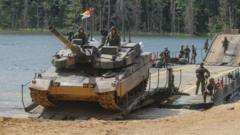
In response to these escalating threats, Poland has embarked on an ambitious program to fortify its borders and modernise its armed forces. Defence spending has soared, with Warsaw now allocating approximately 4 per cent of its national GDP to defence – double the NATO benchmark. This significant financial commitment, which could equate to around 40 billion AUD annually, underscores the gravity with which Poland views the current geopolitical climate. The shopping list includes advanced missile defence systems, F-35 fighter jets, and an expansion of its ground forces, aiming to create a formidable deterrent against potential aggressors.
Critically, Poland's strategic location, sharing a direct border with both Russia’s Kaliningrad exclave and Belarus, makes it a frontline state in any potential confrontation. This geographical reality has long shaped its defence policy, but the current urgency reflects a qualitative shift in perceived threats. Recent large-scale military exercises, both national and with NATO allies, have become a common sight across the country, signalling a readiness to defend its sovereignty.
A Call for European Unity
Tusk’s warnings extend beyond Poland’s immediate concerns, serving as a powerful plea for greater European unity and a more robust collective defence strategy. He has repeatedly stressed that the continent must internalise the reality of a persistent Russian threat and move beyond complacency. This involves not only increased defence spending across all member states but also a more streamlined and efficient military-industrial complex capable of sustained production in a crisis.
His advocacy for a stronger, more cohesive European security architecture resonates with growing concerns in Brussels and other European capitals, where the long-term implications of Russia’s aggressive posture are being seriously re-evaluated. The narrative from Warsaw is clear: Europe can no longer afford to be a bystander to the eastern conflict; it must actively prepare for the possibility of its direct involvement.
Economic Realities and Public Preparedness
The considerable investment in defence comes at a time of broader economic challenges, yet there appears to be widespread public support for these measures. Opinion polls consistently show that a majority of Poles are deeply concerned about Russia and back their government's strong stance. This national resolve is being further bolstered by public awareness campaigns aimed at preparing citizens for potential emergencies, including civil defence drills and information dissemination on crisis response.
The economic implications, while substantial, are framed as a necessary cost for maintaining peace and security. The Polish government is also exploring innovative financing mechanisms and seeking greater cooperation with defence industries across Europe to maximise the impact of its expenditure. As the "critical months" unfold, Poland remains steadfast, a vigilant sentinel on Europe's eastern frontier, urging its allies to confront the burgeoning threats with resolve and unity.