
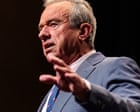
Judicial police in Guinea-Bissau have raided the offices of controversial vaccine researchers publicly championed by US Health Secretary Robert F Kennedy Jr, seizing supplies of infant hepatitis B immunisations.
Reuters World reported that the judicial operation targeted researchers who have long sat at the centre of an escalating international dispute over clinical trials conducted on West African newborns. Law enforcement authorities confirmed the intervention in a public statement, confirming that officers had confiscated stockpiles of the paediatric hepatitis B vaccine from the research facility.
Diplomatic and Ethical Friction in Bissau
The research programme has commanded substantial financial backing from the United States, receiving US$1.6 million (about $2.5 million AUD) from the US Centers for Disease Control and Prevention (CDC). That funding was subsequently matched dollar-for-dollar by the Pershing Square Foundation and the Bluebell Foundation, bringing total capital behind the project to US$3.2 million (approx. $5 million AUD).
Despite the significant influx of Western funding, the trial has faced sustained blowback from bioethics monitors and local officials in Guinea-Bissau. The coastal nation has frequently contended with fragile healthcare infrastructure, leaving overseas clinical programmes under sharp scrutiny regarding trial ethics, patient consent, and regulatory oversight.
Reuters World reported that the seizure represents an unprecedented escalation by local law enforcement, bringing field operations to an abrupt halt while investigators evaluate whether the group breached national medical codes.
Robert F Kennedy Jr’s Endorsement Under Scrutiny
The researchers involved have enjoyed prominent political patronage from Robert F Kennedy Jr, who now leads the US Department of Health and Human Services (HHS). Mr Kennedy, whose deep scepticism of established immunisation schedules has provoked alarm among mainstream epidemiologists worldwide, previously elevated the figures leading the Guinea-Bissau project as "deities of vaccine research".
His praise has thrust what was once an obscure, highly disputed academic debate into the global diplomatic arena. Public health experts have expressed mounting concern that such high-level political promotion lends legitimacy to unconventional research agendas that challenge settled paediatric medicine.
Critics contend that questioning established vaccination protocols in developing regions threatens to depress immunisation uptake, exposing vulnerable newborn populations to preventable and life-threatening infections.
Clampdown Halts Infant Hepatitis Trials
The confiscation of the vaccine vials directly impacts ongoing studies into early-infant immune responses. The World Health Organisation explicitly advises administering the first dose of the hepatitis B vaccine within 24 hours of birth to prevent mother-to-child transmission, a critical public health pillar across sub-Saharan Africa where chronic liver disease remains prevalent.
The swift intervention by Guinea-Bissau's judicial police underscores a deepening rift between fringe medical movements gaining executive currency in Washington and the front-line regulatory agencies responsible for protecting patient welfare in the developing world.