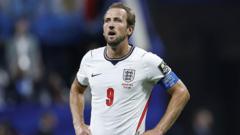
The prospect of England transitioning away from a traditional number nine, specifically after the inevitable departure of their record goal-scorer Harry Kane, is gaining traction among football pundits and fans alike. This strategic pivot, advocating for a 'false nine' system, could signify a profound evolution in the Three Lions' tactical blueprint, moving away from relying on a prolific central striker to a more fluid, possession-based attacking approach.
The debate over England's post-Kane offensive structure isn't merely academic; it reflects a broader trend in global football where traditional roles are being re-evaluated in favour of dynamic, multi-functional players. For a nation that has historically prided itself on powerful centre-forwards, from Gary Lineker to Alan Shearer, the idea of a 'false nine' represents a significant cultural and tactical leap.
The Allure of the False Nine
A 'false nine' is, in essence, a centre-forward who drops deep into midfield, creating space for wingers or attacking midfielders to run into from wide positions. This tactical ploy can disorient opposition defenders, who are left with a dilemma: follow the dropping striker and leave space in behind, or hold their position and allow the 'false nine' to orchestrate play from a deeper role. The benefits are manifold: increased midfield control, unpredictability in attack, and the ability to overload central areas. BBC Sport recently highlighted this tactical shift as a potential future for the Three Lions, suggesting that the national setup is already contemplating life without their prolific captain.
For England, this could unlock a new dimension to their attacking play, particularly given the abundance of talented, technically adept midfielders and wide players emerging through their ranks. Imagine the likes of Phil Foden, Jude Bellingham, or Bukayo Saka thriving in a system that allows them more freedom to interchange positions and exploit gaps created by a withdrawing forward.
Who Fits the Mould?
The immediate challenge for England would be identifying a player capable of fulfilling the demanding role of a 'false nine'. It requires exceptional footballing intelligence, superb passing range, and the uncanny ability to draw defenders out of position without losing attacking impetus. Currently, England boasts several players who exhibit some of these attributes, though none are a natural 'false nine' in the mould of a Roberto Firmino or a Lionel Messi at his peak in that position.
Creative midfielders or technically gifted wingers could be repurposed, but such a transition would necessitate significant coaching and adaptation. The risk-reward ratio is high: a successful implementation could make England's attack devastatingly fluid, while a misstep could leave them blunt and lacking a focal point. The national team's coaching staff would undoubtedly spend countless hours scouting and training individuals to perfect this nuanced role.
Tactical Implications and Challenges
The adoption of a false nine wouldn't just affect the player leading the line; it would ripple through the entire team's tactical structure. Full-backs would need to be even more adventurous, midfielders would require exceptional positional discipline, and wingers would carry a greater goal-scoring burden. Furthermore, the psychological aspect cannot be overlooked. English football fans, accustomed to a traditional striker, might take time to embrace a system that sees fewer direct shots from a central attacker.
Financially, the impact is less direct than, say, a transfer market splurge, but the investment in coaching expertise and youth development to cultivate players suited to such a role would be substantial. This might be a long-term play, rather than an immediate overhaul. While a revolutionary step, it presents an exciting, albeit challenging, path forward for England as they contemplate a future without the indelible presence of Harry Kane at the apex of their attack. The question now isn't if, but when, and with whom, this tactical evolution will truly begin. The footballing world, from London to Sydney, will be watching closely.