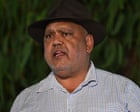
In the wake of the resounding 'No' vote in the Indigenous Voice to Parliament referendum, a powerful and poignant call for a fundamental re-evaluation of Australia's approach to Aboriginal affairs has emerged from one of the nation's most influential Indigenous voices.
Noel Pearson, a driving force behind the Uluru Statement from the Heart, has declared that the inability to deliver meaningful change for Indigenous Australians is no longer merely a moral failing, but has evolved into a "civilisational one." His compelling assertion, highlighted by Guardian Australian politics, underscores the profound disappointment and urgent need for a new direction after the national rejection of the Voice.
A 'Prayer' Unanswered
Pearson describes the Uluru Statement from the Heart, delivered to the Australian people in 2017, as a "prayer." It was a heartfelt plea for recognition, justice, and a more equitable future, offering a pathway to self-determination through a constitutionally enshrined Voice. The hope embedded within its eloquent words, he suggests, was palpable – a hope that has now been dimmed, but not extinguished, by the referendum's outcome. The Statement, a powerful consensus document, sought to address deeply entrenched systemic issues through structural reform, a concept that Pearson insists must now be revisited with renewed vigour.
Unacceptable Disparities Persist
Pearson pointed to the grim statistics that continue to plague Indigenous communities, painting a stark picture of disparity and injustice. He highlighted that Aboriginal and Torres Strait Islander people are, proportionately, the most incarcerated population on the planet. "We are not an innately criminal people," Pearson stated, challenging the underlying assumptions that often contribute to these devastating figures. This high rate of incarceration, he argues, is a symptom of broader systemic failures rather than an inherent flaw within Indigenous communities.
Furthermore, the alarming rate at which Indigenous children are alienated from their families, often removed from their homes, was another critical issue raised. "Our children are alienated from their families at unprecedented rates. This cannot be because we have no love for them," Pearson powerfully articulated, dismissing any notion that a lack of familial care is the cause. These separations, he implies, are often the result of policies and practices that fail to adequately support Indigenous families and communities.
The Crushing Burden on Youth
The plight of Indigenous youth in detention facilities also drew Pearson's impassioned concern. He lamented the "obscene numbers" of young Aboriginal and Torres Strait Islander people languishing in detention, a situation that robs both individuals and the nation of future potential. "They should be our hope for the future," he declared, emphasising the tragic loss of opportunity and talent that these incarceration rates represent. The overrepresentation of Indigenous youth in the justice system is a long-standing issue that successive governments have struggled to meaningfully address.
A Path Forward Beyond the Voice
Pearson’s commentary, as reported by Guardian Australian politics, signals a clear need for the conversation about structural reform of federal arrangements governing Aboriginal affairs to resume with urgency. While the Voice referendum may have failed to secure the desired constitutional change, the underlying issues it sought to address remain profoundly unresolved. The emphasis on structural reform suggests a move beyond incremental policy adjustments towards fundamental changes in how power is exercised and shared, and how services are designed and delivered to Indigenous communities.
The challenge now for Australian political leaders and the wider community is to heed Pearson's call and identify new pathways for justice and equity. The 'civilisational failure' he describes demands a response that acknowledges the deep historical injustices and ongoing systemic inequalities, ensuring that the hope once embodied by the Uluru Statement is reignited through tangible and lasting reform.