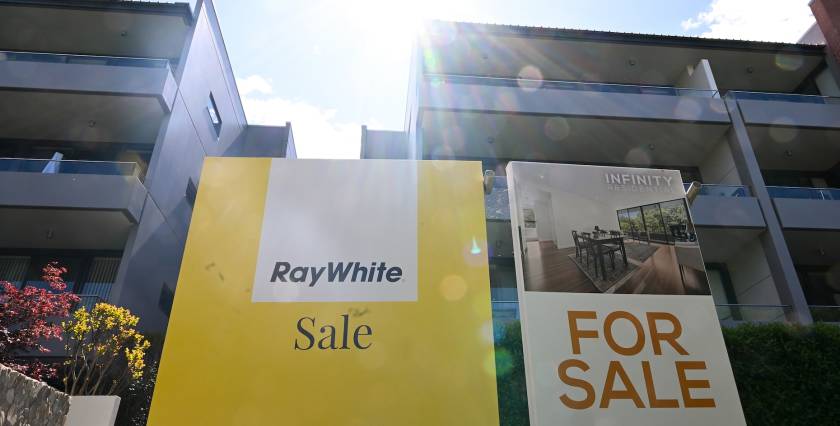
Australian residential property values have slipped for a seventh consecutive month, compounding what economists warn could become the nation’s sharpest real estate downturn in four decades ahead of another cash rate verdict.
The protracted drop reflects compounding strains on households across capital cities and regional centres, where successive interest rate increases have aggressively eroded borrowing capacity. As Crikey reported, analysts now suggest the continuous slide across consecutive months could establish the steepest peak-to-trough national contraction recorded in 40 years, outstripping previous housing slumps in both velocity and geographic scope.
Steepest Property Retreat in Four Decades
The sustained decline marks a decisive conclusion to the pandemic-era housing rally, which had lifted dwelling values by double digits across Australia. Sydney and Melbourne have remained at the epicentre of the downturn, registering sharp reductions in clearance rates alongside widespread discounting by vendors. Regional markets, which once provided a haven of affordability and sustained demand throughout the pandemic, are also beginning to mirror capital city trends as local buyer activity cools under restricted finance conditions.
Market specialists note that transaction volumes have retreated significantly, with potential buyers either locked out by stricter prudential assessment criteria or electing to wait for signs of market stabilisation. Properties are lingering on listings registers for markedly longer durations compared to 12 months ago, prompting real estate agencies to revise clearance benchmarks downward as prospective homeowners adopt an attitude of deep caution amidst heightened economic ambiguity.
Reserve Bank Dilemma Ahead of Cash Rate Ruling
The persistent depreciation in residential asset values comes as mortgagees brace for the Reserve Bank of Australia’s upcoming board meeting. Central bank officials face the intricate challenge of balancing headline inflation containment against the tangible risk of inducing a severe domestic downturn. The transmission of monetary policy has exerted unprecedented pressure on leveraged households, many of whom are grappling with repayments that have escalated by thousands of dollars annually on typical mortgage packages.
Compounding industry anxieties is the impending expiration of fixed-rate borrowing terms secured during record-low pandemic regimes. Hundreds of thousands of borrowers face an abrupt repayment shock as their loans reset to prevailing variable rates, threatening to elevate mortgage stress and force distress sales in vulnerable postcodes. Economists warn that the wealth effect associated with declining home equity will inevitably constrain broader consumer expenditure, dragging on domestic economic momentum throughout the year ahead.
Voter Dissatisfaction Mounts as Confidence Erodes
The worsening housing landscape coincides with an increasingly sour public mood toward government leadership. Crikey reported that recent opinion polling illustrates a populace exhausted by cost-of-living pressures, with trust in political institutions and elected officials charting a clear downward trajectory. Communities across the nation are registering frustration over the intersection of declining real wages, climbing energy bills, and mounting housing expenses, leaving governments under intense scrutiny from an electorate experiencing acute financial fatigue.
For policymakers in Canberra, the political consequences of a synchronized property slump and cost-of-living squeeze are severe. Demands for structural tax reform, targeted relief packages, and comprehensive housing supply initiatives have grown louder from crossbenchers and advocacy bodies. Yet with federal fiscal parameters constrained, public patience appears to be wearing thin, signalling that the intersection of rising interest rates and falling property values is extracting a heavy toll on the national political fabric.