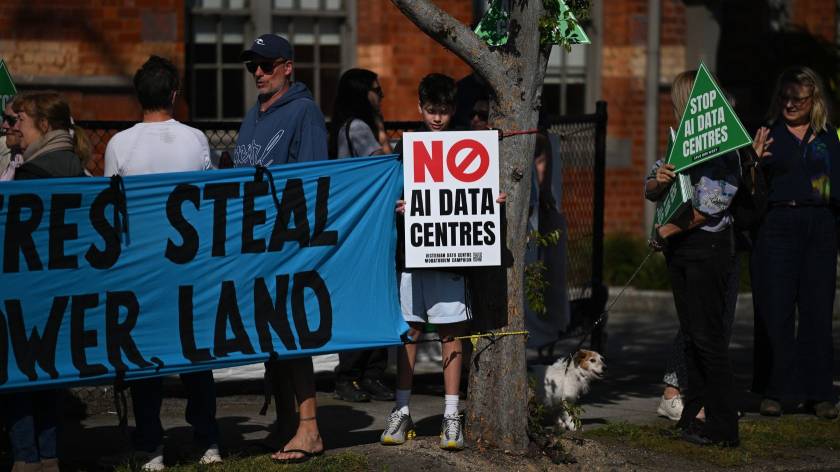
Surging investment in artificial intelligence data centres faces growing political resistance across Australia, as communities fear the energy-intensive facilities deliver soaring electricity bills while offering negligible public economic dividend.
The warning comes as multinational technology conglomerates accelerate plans to pour billions of dollars into domestic cloud and computing infrastructure, capitalising on Australia's strategic position in the Asia-Pacific and its burgeoning pipeline of renewable energy projects.
A modern wave of economic dislocation
However, the unchecked expansion is increasingly viewed through a sceptical political lens. An analysis published by independent news outlet Crikey reported that data centre operators are fundamentally failing to read the room, arguing that the artificial intelligence boom mirrors the most divisive aspects of late-twentieth-century neoliberal economic reform.
According to the report, the rapid deployment of server farms offers everyday households little beyond localized dislocation, rising utility costs, and heightened competition for critical infrastructure, while the financial windfalls and productivity gains are captured by offshore tech giants and executive elites. For regional communities and suburban fringes hosting these monolithic facilities, the promised technological dividend remains largely abstract.
Grid bottlenecks and escalating power bills
At the heart of the burgeoning friction is the immense thirst data centres have for electricity and water. Unlike ordinary commercial developments, hyperscale computing facilities require uninterrupted baseload power 24 hours a day, placing unprecedented strain on the National Electricity Market at the precise moment Australia is retiring ageing coal-fired generators.
Energy analysts have warned that the massive connection queues for data centres in key metropolitan nodes—particularly in Western Sydney and Melbourne—threaten to divert clean energy generation away from general consumers. In turn, network augmentation costs run into the billions of dollars, expenses that consumer advocates fear will inevitably be socialised onto household power bills through higher network tariffs.
Water consumption for server cooling systems has also drawn scrutiny, particularly in regions that regularly face severe drought cycles and municipal supply restrictions.
Scant local jobs behind warehouse walls
Compounding the public disquiet is the negligible long-term employment generated by these multibillion-dollar investments. While the construction phase provides a temporary boost to local trades, operational data centres are essentially automated warehouses requiring minimal on-site staff.
A single facility occupying hectares of prime industrial land may employ only a handful of security guards, facilities managers, and system technicians once completed. This stark imbalance between physical footprint and sustained community employment has left local councils questioning whether the zoning concessions granted to tech firms are justified.
Rising political scrutiny on Big Tech
The deepening public unease is already prompting calls in Canberra and state capitals for a more assertive regulatory framework. Policymakers are being urged to introduce dedicated power tariffs for hyperscale users, mandate on-site renewable generation, and enforce stringent transparency around water consumption.
Unless tech firms demonstrate tangible, shared value for the communities they inhabit, the sector risks sparking an intense public backlash similar to the community rebellions that have halted computing developments across Europe and North America.