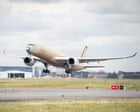
Melbourne, Australia – The future of long-haul air travel landed dramatically in Melbourne on Friday, as a specially modified Airbus A350-1000ULR touched down after an epic 19-hour, 17,000-kilometre direct flight from Toulouse, France. This monumental journey marks a critical milestone for Qantas's ambitious 'Project Sunrise', promising to connect Australia directly with major global hubs like London and New York.
The advanced aircraft, designed to push the boundaries of commercial aviation, became the most-watched plane on flight tracking websites worldwide during its marathon journey, captivating aviation enthusiasts and industry observers alike. Its arrival in Australia heralds a new era for Qantas, as the airline seeks to cement its position at the forefront of ultra-long-range flights, slashing travel times and enhancing passenger experience on the world’s longest routes.
Project Sunrise Takes Flight
Qantas's 'Project Sunrise' is an audacious endeavour to operate direct commercial flights from Australia's eastern seaboard to distant metropolises such as London and New York. Currently, passengers endure layovers, adding hours to already lengthy journeys. The A350-1000ULR, with its extended range and efficiency, is central to this vision, promising to revolutionise international travel for millions of Australians.
The test flight from Airbus's manufacturing facility in Toulouse to Melbourne was more than just a delivery journey; it was a rigorous examination of the aircraft's capabilities under real-world ultra-long-haul conditions. Data gathered on fuel burn, engine performance, and cabin environment will be meticulously analysed to fine-tune the final specifications for Qantas's bespoke fleet. The Guardian Australia reported that the aircraft's journey drew significant online attention, underscoring the public's fascination with this leap in aviation technology.
Engineering Marvel and Passenger Comfort
The Airbus A350-1000ULR (Ultra Long Range) variant is specifically engineered to achieve such extraordinary distances. It features an increased fuel capacity, aerodynamic enhancements, and more fuel-efficient Rolls-Royce Trent XWB engines. For passengers, Qantas has indicated plans for a cabin configuration that will prioritise comfort on these extended flights, potentially including dedicated relaxation zones, enhanced seating, and improved air quality systems to combat fatigue.
While specific cabin layouts are still under wraps, the focus is clearly on mitigating the challenges of 20-hour-plus journeys. Experts suggest innovations will include advanced lighting cycles to adjust to time zones and potentially even onboard exercise areas. The multi-million dollar investment by Qantas in these aircraft signals a firm commitment to a premium, non-stop travel experience, positioning it competitively against other global carriers who still rely on stopovers for similar routes.
Economic Impact and Future Prospects
The arrival of ultra-long-haul services could have significant economic implications for Australia. Direct flights mean reduced travel times for business travellers, potentially fostering stronger economic ties with global financial centres. For tourism, it makes Australia a more accessible and attractive destination for vacationers from Europe and North America, bypassing the need for often tiresome connecting flights.
Qantas has been a pioneer in long-haul aviation, with its history of groundbreaking flights. Project Sunrise represents the next chapter in this legacy, pushing the boundaries of what is possible in commercial air travel. While the exact timeline for the commencement of commercial Project Sunrise flights is subject to regulatory approvals and further testing, the successful completion of this 17,000km flight is a powerful affirmation of Qantas's vision and the incredible capabilities of modern aviation.