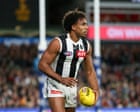
Adelaide Oval became a theatre of jeers last week, with Collingwood’s Isaac Quaynor bearing the brunt of sustained booing from Crows supporters. The acrimonious reception, which also extended to former Crows player Billy Frampton and Port Adelaide’s Dan Houston, highlighted lingering resentment over a controversial homophobic slur incident involving Crows star Izak Rankine last August.
The orchestrated heckling of Quaynor began merely ten seconds into the match, as the Magpies defender secured possession. What started as mild dissent quickly escalated into a chorus of boos, particularly as Quaynor consistently found himself with the ball. While some of the crowd’s ire was attributed to his prominent role in the game, a significant portion was undoubtedly linked to the unresolved tensions surrounding Rankine’s prior transgression.
A History of Hurt Fuels the Chorus
The animosity towards Quaynor appears deeply rooted in the fallout from Izak Rankine's widely reported homophobic slur last year. Guardian Australia Sport highlighted that the “resentment over the handling of Rankine’s homophobic slur last August was clearly still lingering.” This incident, which saw Rankine publicly apologise, has evidently left a raw nerve exposed among the Adelaide faithful. The booing serves as a potent, albeit contentious, expression of their dissatisfaction with how the situation unfolded or was perceived to have been resolved.
The build-up to the match saw local media personalities anticipate a hostile reception. Stephen “Rowey” Rowe, a prominent Adelaide broadcaster, had accurately predicted a “cacophony of boos” in the lead-up. Speaking on radio, Rowe suggested the fans were “a bit dirty ‘cos he sooky-sooky la-lahed, and rightly so,” indicating a sentiment that Quaynor had somehow inflamed the situation or benefited from it unfairly. This sentiment, however vague, underscores the emotional investment fans have in their team and their perception of fair play.
The Unwritten Rules of the Fan Divide
The targeting of specific players through booing is a complex phenomenon in Australian rules football, often blurring the lines between passionate support and unsportsmanlike conduct. While boos for former players returning to their old stomping ground (like Billy Frampton) are a time-honoured, if unwelcome, tradition, the intensity directed at Quaynor suggests a more profound grievance. It speaks to a deep-seated feeling of injustice among some sections of the Crows' supporter base, who may feel that the consequences for the homophobic slur incident were not sufficiently punitive or that there was an element of perceived inequity in how the situation was managed.
Similarly, the booing of Dan Houston, following his robust tackle on Izak Rankine in a previous encounter, further illustrates how a player's past actions, particularly contentious ones, can linger in the collective memory of an opposing crowd. These incidents, while part of the game's inherent physicality, are often reinterpreted and amplified through the lens of partisan support, leading to emotionally charged responses from the stands.
When Public Opinion Meets the Field
Guardian Australia Sport’s report, drawn from their popular weekly AFL newsletter “From the Pocket,” underscores the broader conversation within Australian football regarding fan behaviour and accountability. The equivocation often observed in the aftermath of such incidents – a reluctance to definitively condemn or condone the booing – reflects the difficulty in navigating the nuances of fan expression versus appropriate conduct. Booing, while not physical, can have a psychological impact on players and contribute to a hostile environment, raising questions about the role of clubs and the league in fostering respectful interactions.
As the AFL season progresses, the incident at Adelaide Oval serves as a stark reminder that the tensions and controversies off the field can irrevocably spill onto it, influencing player performance, fan experience, and the overall discourse surrounding the sport. The underlying issues that fuel such passionate, and at times vitriolic, displays are seldom simple, often reflecting deeper currents of community sentiment and perceived fairness.