
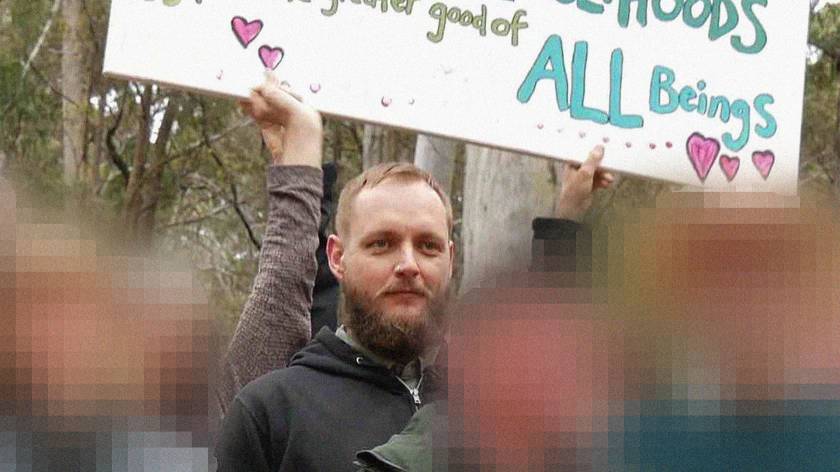
The man charged with allegedly ramming independent federal MP Helen Haines with a vehicle was once deeply embedded in progressive politics, raising fresh questions about modern political radicalisation across Australia.
Brendan Nugent faces multiple charges following the confrontation in regional Victoria, which left the member for Indi shaken and reignited nationwide discussions surrounding the physical safety of elected parliamentarians. While formal motives have not been established in court, an investigation by independent news outlet Crikey reported that Nugent possessed an extensive history aligned with progressive causes prior to the alleged incident.
Tracing an unexpected ideological shift
According to the report published by Crikey, acquaintances and past public records indicate Nugent was previously engaged in causes typically championed by the political left. The revelation complicates initial public assumptions that political aggression directed at prominent community independents inevitably emanates from far-right networks or conservative agitators.
Criminologists and political scientists have warned against rushing to conclusions while the matter remains before the courts. Nevertheless, the trajectory reported by Crikey highlights an uncomfortable reality for Australia's political establishment: fringe radicalisation does not follow tidy partisan lines.
While police investigators have yet to detail any specific manifesto or direct political motive linked to the collision, the suspect's background has prompted debate over how individuals transition from mainstream progressive advocacy toward extreme, confrontational actions.
Blurring boundaries of political grievance
The case underscores a broader shift in Australian political subcultures, where conventional divisions between left and right have become increasingly permeable. In the wake of the pandemic, anti-establishment sentiment, public scepticism toward government institutions, and conspiratorial thinking have drawn followers from both ends of the ideological spectrum.
Security analysts have observed that grievance-fuelled violence often begins with general disaffection before crystallising around specific, visible targets. Independent representatives, who frequently campaign on institutional reform and community accessibility, occupy a uniquely exposed position within this landscape.
Dr Haines, who has held the north-east Victorian electorate of Indi since succeeding Cathy McGowan in 2019, has long maintained an accessible public profile throughout regional towns, regularly meeting constituents without the heavy security details typical of senior cabinet ministers.
Heightened threats confronting federal politicians
The incident arrives amid escalating concern within the Australian Federal Police regarding the volume of threats directed at federal politicians. Parliamentary authorities have repeatedly updated security guidance and funding allocations for constituency offices following a documented surge in harassment, particularly toward female parliamentarians.
While community independents have built their political identities around unmediated, grassroots engagement, the alleged attack on Dr Haines exposes the vulnerabilities inherent in such visibility. Security reviews are expected to reconsider how regional members engage with the public as threats evolve.
With Nugent’s legal proceedings ongoing, judicial determinations will ultimately clarify the criminal facts of the matter. Yet the revelations concerning his political background serve as a sobering reminder that ideological volatility remains an unpredictable threat across the entire political spectrum.


