Japanese authorities have intensified their search and rescue operations following the powerful New Year's Day earthquake, focusing efforts on an Aeon Mall complex that tragically collapsed, as the official death toll stands at 13 with fears it will inevitably rise.
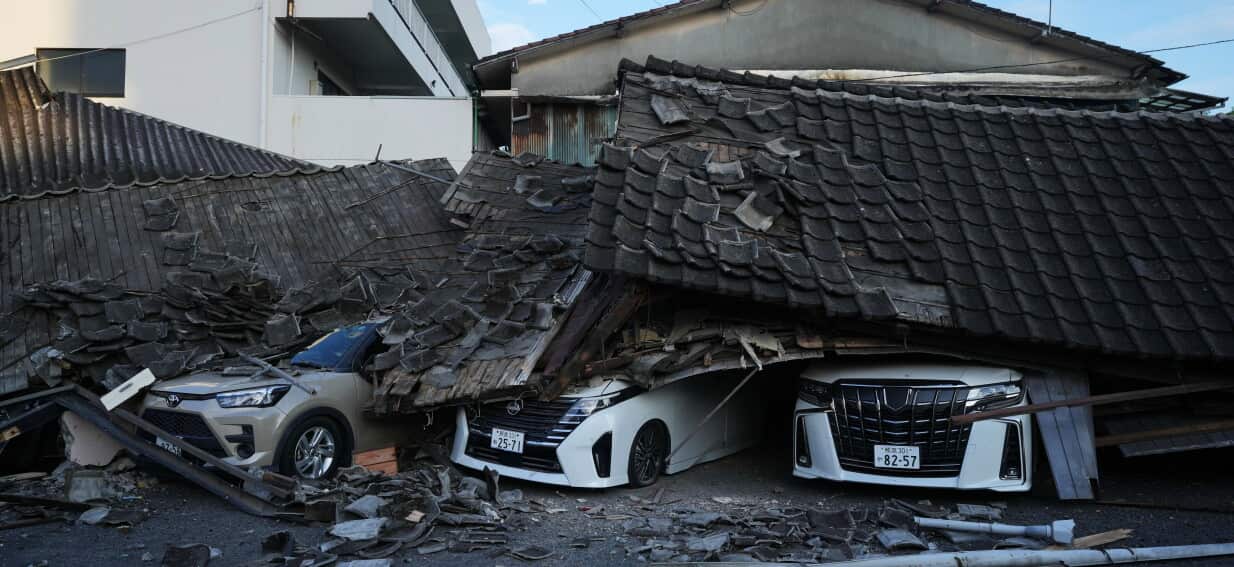
The magnitude 7.6 quake, which struck the Noto Peninsula in Ishikawa Prefecture, has caused widespread devastation, toppling buildings, triggering landslides, and leaving thousands without power and water. The immediate concern remains the discovery of survivors, particularly within the wreckage of the multi-storey shopping centre.
Crumbling infrastructure hinders vital aid
Access to the hardest-hit areas has been severely hampered by widespread destruction of roads and infrastructure, complicating the delivery of vital aid and delaying the deployment of full rescue contingents. Aerial footage broadcast by Japanese media outlets revealed the sheer scale of the damage, with entire stretches of coastline scarred by seismic shifts and tsunamis. Coastal towns, particularly those facing the Sea of Japan, have borne the brunt of the destruction, with houses reduced to splintered timber and debris.
Amidst the chaos, reports indicate that thousands of residents have been evacuated to emergency shelters, bracing for further aftershocks which continue to rattle the region. The Japanese government has mobilised its self-defence forces, deploying personnel to assist with rescue operations and provide essential supplies to those displaced. However, the sheer geographical spread of the destruction poses a significant logistical challenge, testing the nation's renowned disaster preparedness.
Hope dwindles as hours turn to days
Each passing hour diminishes the likelihood of finding survivors, a grim reality understood by the tireless rescue crews working around the clock. The focus on the collapsed Aeon Mall underscores the urgency, with emergency services meticulously sifting through concrete and twisted steel, listening for any signs of life. SBS News Top Stories reported that the death toll of 13 is expected to rise as rescuers reach more isolated areas and fully assess the damage to residential structures and commercial buildings.
The earthquake also triggered tsunami warnings, with waves of over a metre recorded in some areas, further exacerbating the damage and forcing coastal communities to flee. While the immediate tsunami threat has receded, the impact on port facilities and fishing communities will be long-lasting, delivering a significant blow to the local economy.
International community offers support
Expressions of sympathy and offers of assistance have poured in from around the globe, with many nations, including Australia, extending their condolences and readiness to provide support. The Australian government indicated it is monitoring the situation closely and is in contact with Japanese authorities to determine what aid might be required in the coming days and weeks. The scale of the humanitarian effort required is immense, with tens of thousands of people affected by the disaster.
As the extent of the damage continues to unfold, Japan faces a monumental recovery effort. The focus now remains firmly on rescue, ensuring that every possible effort is made to locate those still missing and provide immediate relief to the thousands whose lives have been irrevocably altered by this devastating natural disaster.