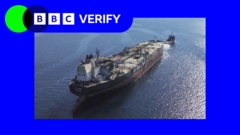
Global shipping routes have been thrown into disarray after a series of oil tankers executed abrupt U-turns in the Red Sea, abandoning their voyages to or from Saudi ports. This dramatic shift, captured by granular ship-tracking data, underscores the escalating threat posed by Yemen's Houthi rebels to one of the world's most critical maritime arteries.
The swift reversals, first reported by BBC World, indicate shipping companies are opting for lengthy and costly diversions around Africa rather than risk passage through the troubled waters. The Houthi-controlled Sana'a regime has repeatedly warned it would target any vessel associated with Israel or bound for Israeli ports, a threat now demonstrably extending to broader commercial shipping in the region.
Seaborne Chess Game Unfolds
The ship-tracking data paints a compelling picture of a high-stakes maritime chess game. Tankers, some laden with millions of barrels of crude oil, were observed mid-voyage suddenly altering course by 180 degrees, opting to re-route via the Cape of Good Hope – a detour that can add weeks to a journey and significantly increase fuel costs, potentially by hundreds of thousands of Australian dollars per vessel. This immediate and costly response by shipping magnates highlights the gravity of the perceived danger, translating directly into higher insurance premiums and, ultimately, increased costs for consumers globally.
Australia, reliant on global supply chains for everything from electronics to manufactured goods, faces potential ripple effects. While not directly targeted, disruptions in key international conduits like the Red Sea inevitably lead to delays and price hikes that can filter down to Australian retailers and households. Industry analysts are already projecting upward pressure on freight costs, which could impact the cost of imported goods in the coming months.
Saudi Ports in the Crosshairs
Significantly, all the affected vessels were either en route to or departing from Saudi Arabian ports. This suggests a broadening of the Houthi's targeting criteria beyond vessels with explicit Israeli connections. The precision of the U-turns, often occurring within hours of vessels entering the southern Red Sea, implies a rapid assessment of risk by shipping operators and a decisive call to abort their original itineraries. The implication is clear: even indirect association with the broader Middle East conflict zone is now deemed too risky for many commercial shipping interests.
The geopolitical ramifications are substantial. The Bab al-Mandab Strait, connecting the Red Sea to the Gulf of Aden, is a choke point through which an estimated 12 per cent of global trade, including a significant portion of the world's oil supply, passes. Sustained disruption could have a profound impact on global energy markets, potentially pushing crude oil prices higher and contributing to inflationary pressures in economies like Australia.
Economic Undertow for Australian Trade
The immediate impact on Australian trade is likely to be an uptick in shipping costs and extended delivery times for goods traversing these international lanes. While Australia's direct oil imports from the Middle East have diversified in recent years, the interconnectedness of global energy markets means any increase in international oil prices will invariably be reflected at Australian bowsers. Furthermore, manufactured goods from Europe, Asia, and the Middle East that typically use the Suez Canal route will now face prolonged journeys, potentially leading to stock shortages or higher retail prices.
The Australian government, alongside international allies, will be closely monitoring the evolving situation. The prospect of an enduring and widespread threat to Red Sea shipping raises complex questions about maritime security and the need for international cooperation to safeguard these vital trade arteries. For Australian businesses and consumers, the sudden turns in the Red Sea signal an unwelcome economic undertow from afar.